Travel
Alfama: Visiting the most beautiful part of Lisbon
Destinations

Joanna Horanin
Current condition

Weather in Lisbon
Sunny
Temperature
Feels like 18.1℃ 😞
Air quality index
Good
Last updated at 10/09/2026, 18:45
Hi, I'm Joanna, the author of The Blond Travels. In the worlds of Thailand and Portugal, I feel like a fish in water - and it's no coincidence! I've been exploring Thailand for over a decade, and I've settled in Portugal for 6 years now. My mission is to support Dreamers - just like you - in discovering these fascinating countries and helping those in love with them find their own place on Earth, preferably for good! Let's uncover these unique corners of the world together.
- The National Pantheon (Igreja de Santa Engrácia)
- Jardim Botto Machado
- Miraduoro das Portas do Sol
- Miraduro de Santa Luzia
- Sé Cathedral
- Saint George’s Castle
- Take the tram 28
- Buy something cool at Feira da Ladra
- The street art
- Fado Concerts
- The oldest house in Lisbon
- How to see Alfama? – Your sightseeing plan
- Alfama – What and where to eat?
- How to get to Alfama?
- Alfama – Where to stay?
- FAQs about Alfama
- Summary – Is it worth visiting Alfama in Lisbon?
The last update of this article – April 2026
Alfama – I fell in love with it at first sight. My tour of Lisbon began right here in this neighborhood, which made a huge impression on me. I don’t think there’s a place as atmospheric and full of charm as this old district. I’d never seen such beautiful buildings or such atmospheric streets with colorful azulejos, laundry hanging from lines above the sidewalks, and fado echoing in every corner. I could walk around Alfama every day and discover something new every day. My favorite route in Alfama doesn’t start at St. George’s Castle or other well-known attractions, but in the tiny streets at the bottom of the hill. I start my day with a coffee and slowly make my way up. That’s where my favorite photo spots are, and I want to share them with you.
Check out my ultimate guide to the holidays in Lisbon
After living in Lisbon for six years, I have my favorite spots there, but I’m sure I’ll find others over time that will steal my heart. You shouldn’t explore this neighborhood the way you would other places—with a map and a guide. Here, you should just wander around and take in the surroundings. However, if you really feel like doing some typical sightseeing, the following places definitely shouldn’t be missing from your list.

Alfama is the oldest district in Lisbon. It was first settled by the Moors, who gave it its name. The name Alfama derives from the word al-hammad, meaning “hot spring.” After the Portuguese took over the district, the area became a poor neighborhood, inhabited mainly by sailors and fishermen. Its narrow, winding streets allowed it to be the only one to survive the 1755 tsunami.
Alfama is currently the city’s most atmospheric neighborhood. It has retained its historic character. Here, you’ll lose yourself wandering the cobblestone streets, admiring the townhouses with colorful azulejos and laundry hanging out to dry, while listening to the Fado music drifting out of the local cafés. Alfama is a place that can truly steal your heart and make you fall in love with Portuguese culture.
As someone who has lived here for quite a few years, I recommend exploring the neighborhood early in the morning or a bit later in the evening. I would avoid exploring it with small children. You also need to be in good shape to tackle the many uphill kilometers. If you feel this isn’t for you, rent a tuk-tuk and take a ride through the upper and lower parts of Alfama.
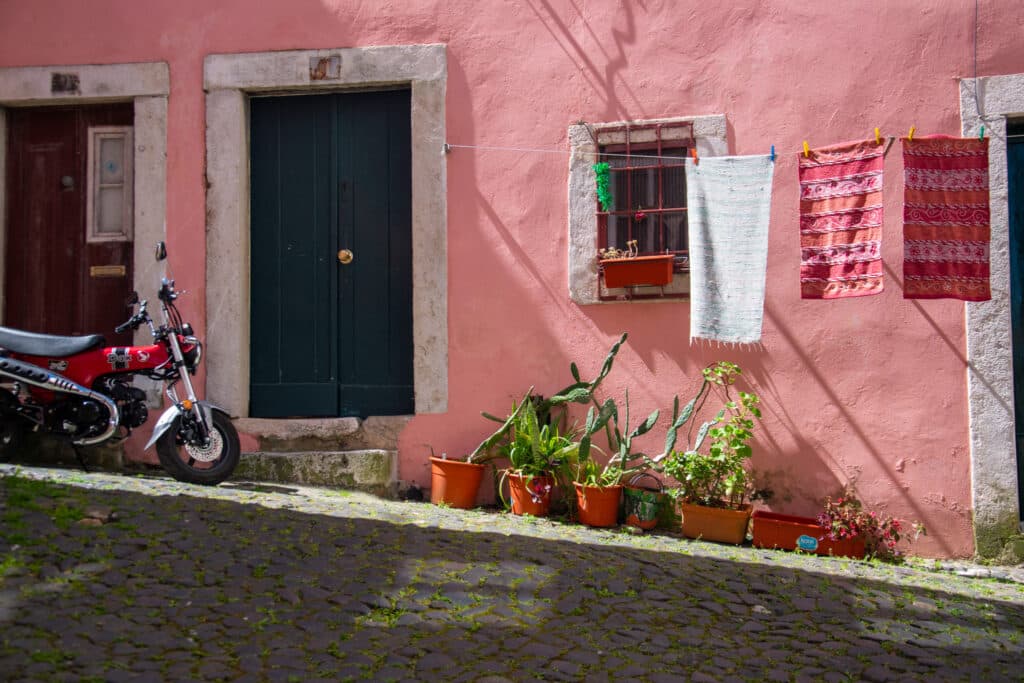
Here are the best things to see and do in Alfama.
The National Pantheon (Igreja de Santa Engrácia)
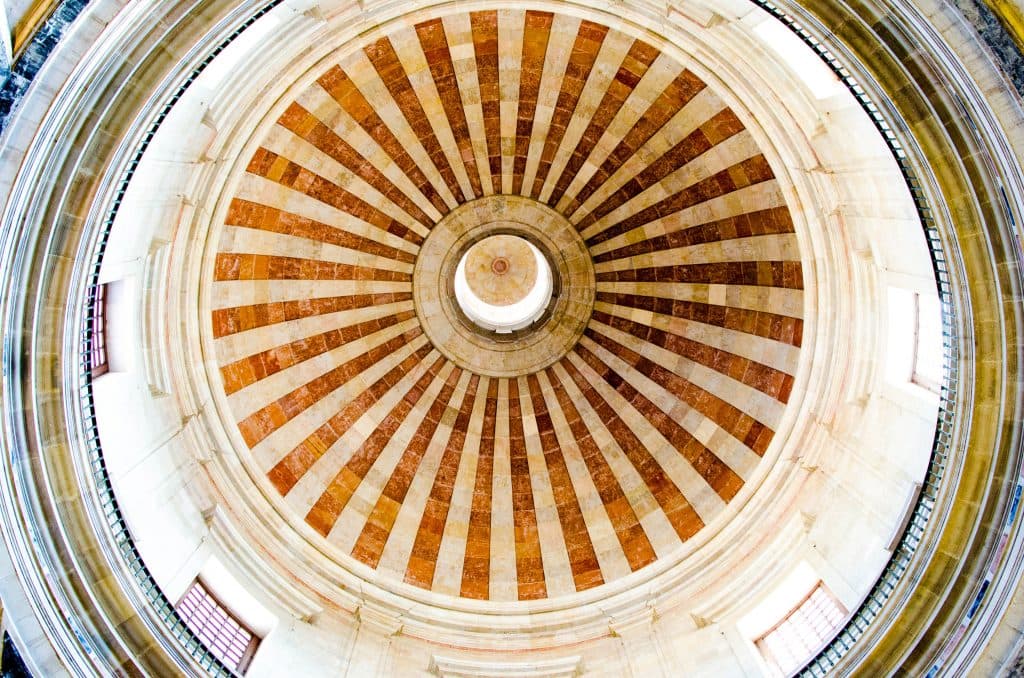
The history of the National Pantheon is long and turbulent. Work on it began as early as the 16th century, when Princess Maria, daughter of King Manuel I, asked the pope to establish a new parish in Lisbon. Legend has it that Simão Pires de Solis, who was convicted of stealing a host in 1630, placed a curse on the church’s construction. It was said to never end.
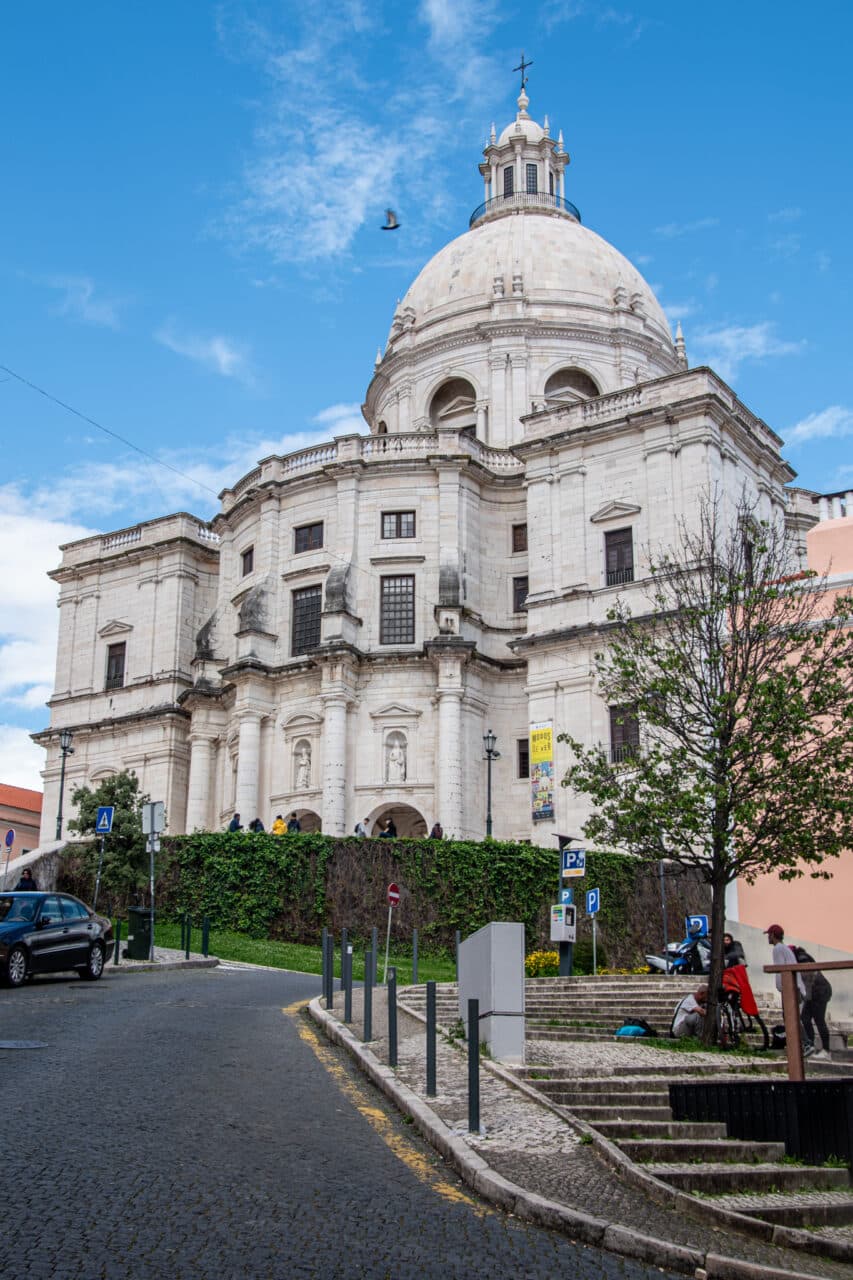
At the beginning of the 18th century, the church had still not been completed and was missing parts of its roof, among other things. However, it survived the 1755 earthquake. Finally, in 1834, the building was handed over to the military and converted into an artillery depot. Two years later, thanks to the efforts of Passos Manuel and Alemida Garrett, it was renamed the National Pantheon. In 1910, it was designated a National Monument, but it continued to be used to store weapons for the military. The building was finally completed in the 1970s and was fully dedicated to its current function.
The National Pantheon in Lisbon houses the tombs of the most distinguished figures of the Portuguese artistic, sporting, and political scenes, including the Fado singer Amália Rodrigues and the soccer player Eusébio da Silva Ferreira. The remains of Vasco da Gama and the national poet Luís de Camões are also interred here.
The building is amazing and it’s worthing climbing the stairs to the top to the viewing terrace.
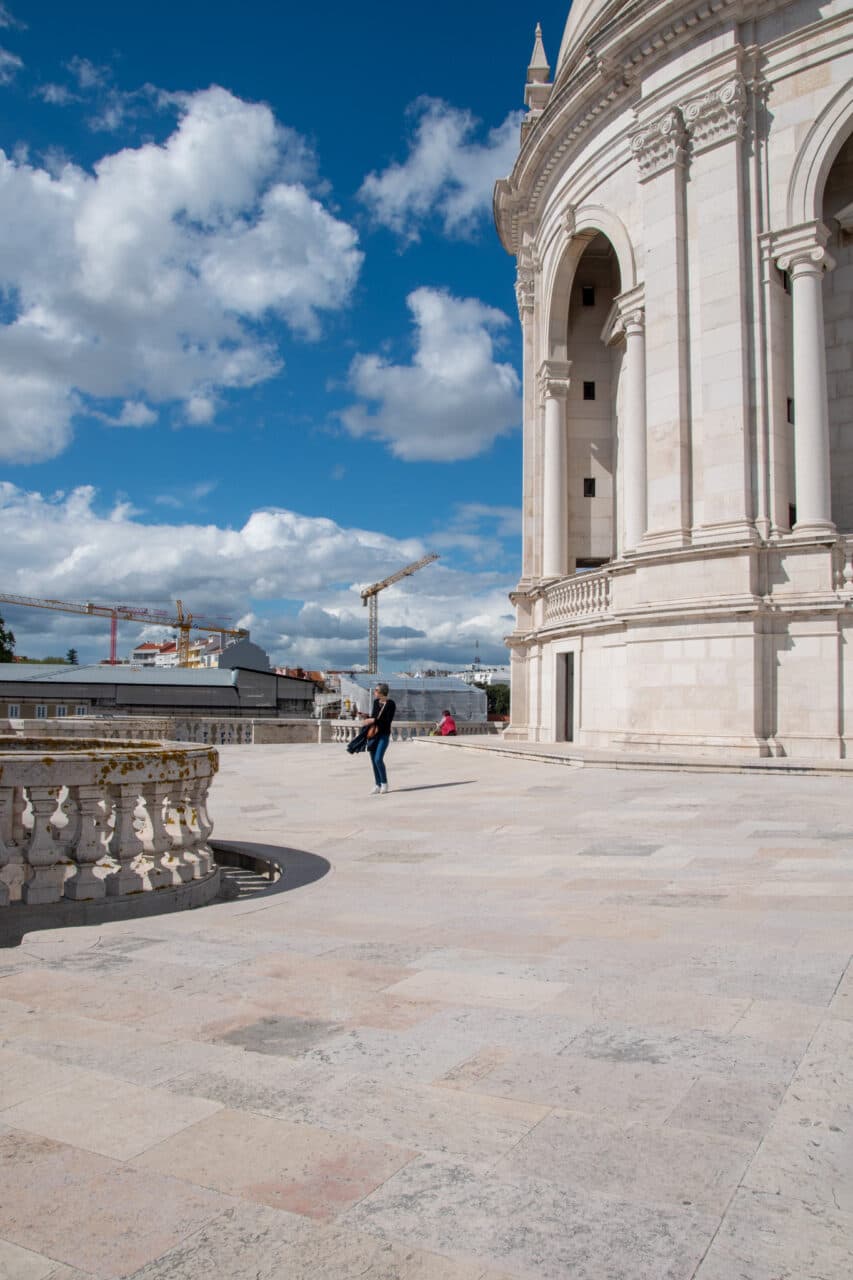
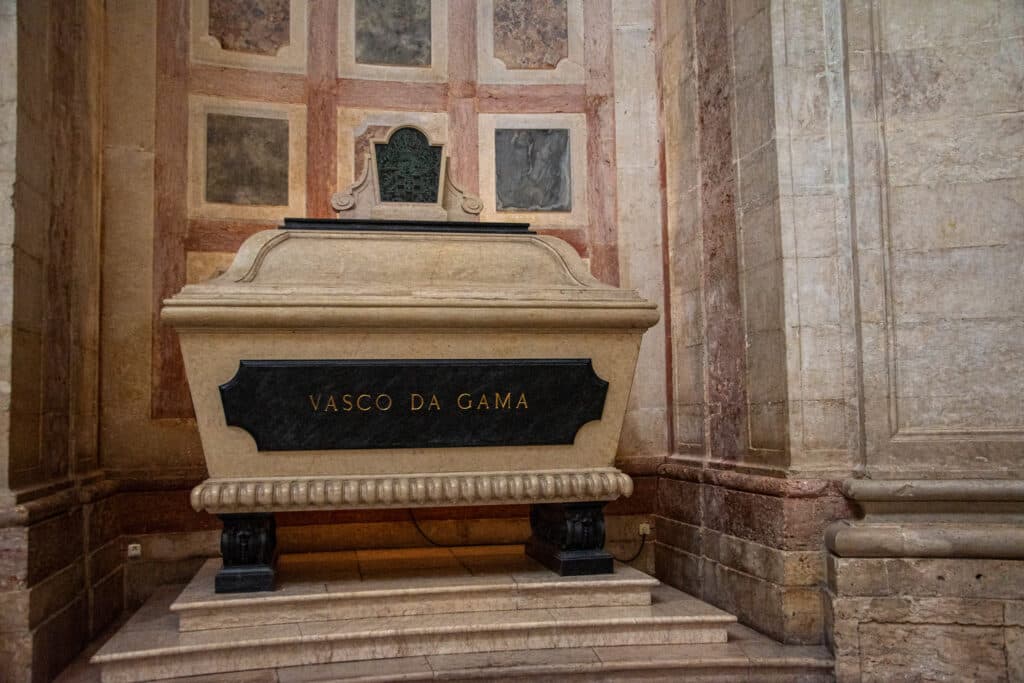
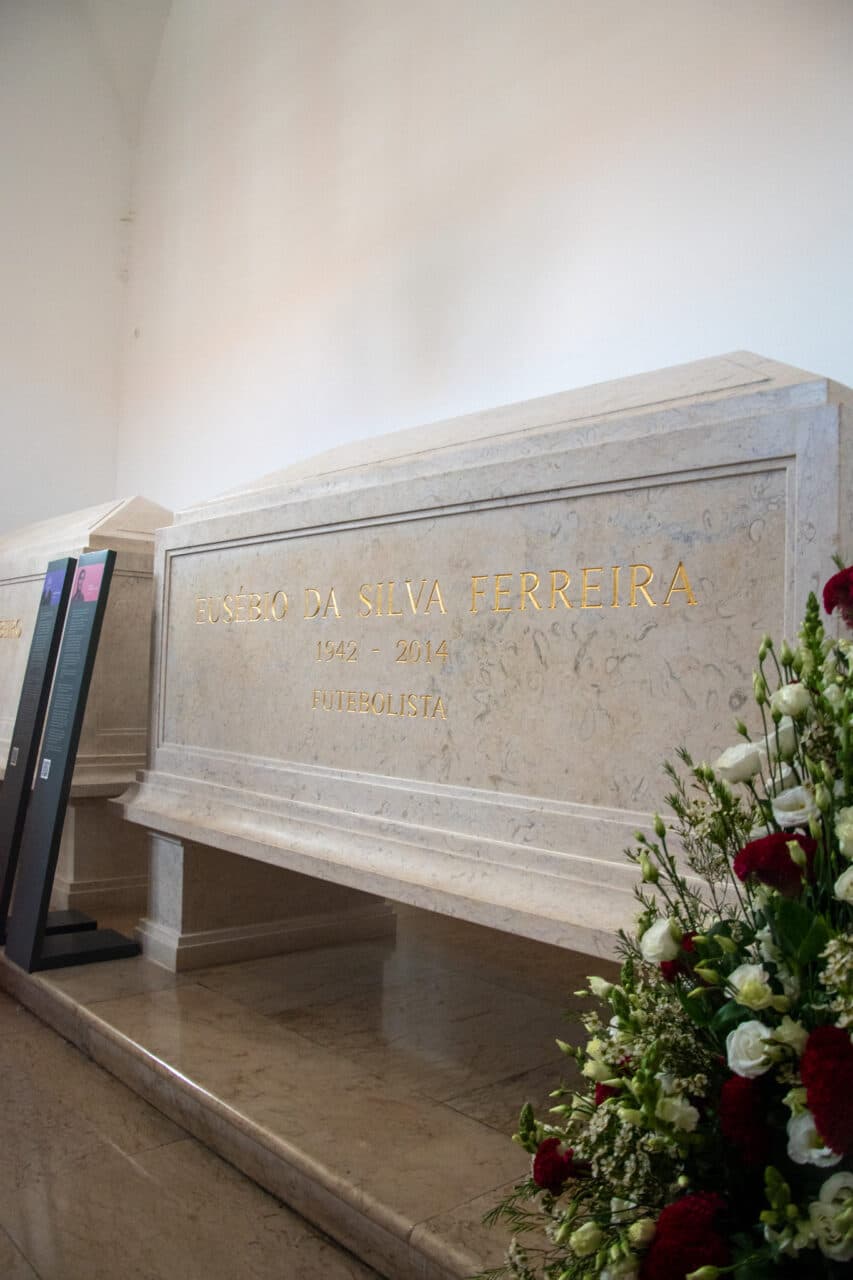
Address: Campo de Santa Clara, 1100-471 Lisboa
Opening hours: Tuesday-Sunday – 10:00 until 6pm
Entry: 10 Euros. You can buy it here. You can also get in for free with the Lisboa Card, which gives you free entries to the best attractions of Lisbon.

Book Tickets & Activities With GetYourGuide
For skip-the-line tickets, day trips, and activities, I use GetYourGuide — easy to compare options, mostly free cancellation, and it’s saved me from queues more than once.
Browse Activities on GetYourGuide →Affiliate link — booking through it supports the blog at no extra cost to you.
Jardim Botto Machado
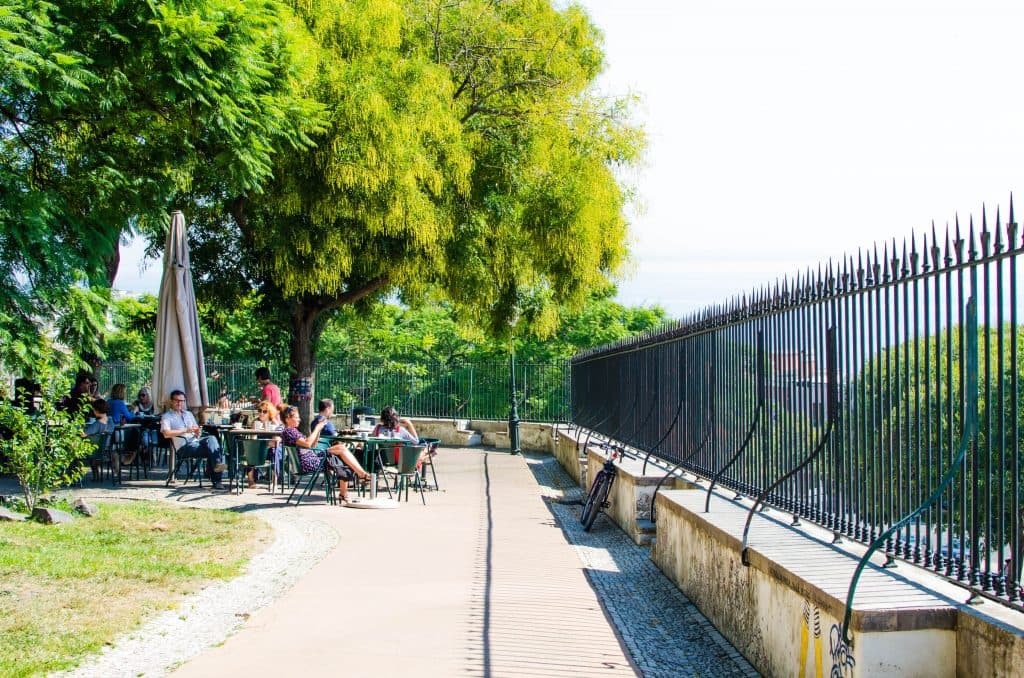
This small park is located just behind the Pantheon. There’s nothing special about it, but it’s a nice place to grab a drink and relax. You can enjoy some cool breeze from the river and admire the views.
Sao Vincente de Fora
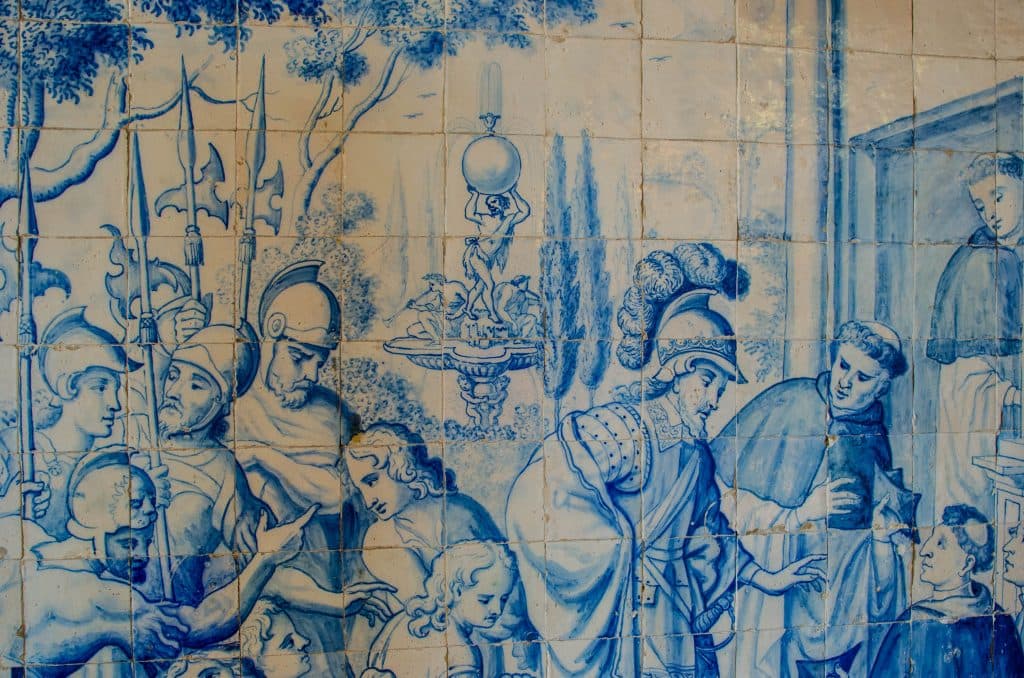
This little church will greet you with a very pleasant and charming courtyard. I hesitated for a moment about whether to go inside — the entrance fee was €5 and I honestly couldn’t tell if it would be worth it. After a quick search online, though, I read that the interior holds a beautiful collection of Baroque azulejos (traditional, colorful tiles) as well as many works of art. That was enough to convince me.
And it turned out the monastic complex you can explore is actually quite large and packed with art from floor to ceiling. No regrets at all — I genuinely think São Vicente de Fora is worth the entry fee, especially if you have any love for art.
Construction of the church began in the 12th century. It stood outside the city gates at the time — hence the name, as fora means “outside.” In the 19th century, Saint Anthony himself spent time here, passing his first days as a monk in this very monastery.
Today the monastery is closely tied to the Cardinal of Lisbon. It houses the offices of the diocesan curia and serves as the place where the Cardinal Patriarch of Lisbon oversees the diocese and receives those who come to him.
The monastery has a handful of main attractions. One of the more interesting is a 12th-century cistern, built to collect rainwater that the monastery could then use for various purposes.
If you haven’t yet seen beautiful azulejos up close, this is your chance. The monastery holds an 18th-century azulejo collection that’s genuinely impressive — vast rooms lined with tiles depicting scenes from Portuguese life and history. Look carefully and you’ll notice the entire story of the monastery’s founding is told there too.
Among the chapels and monastic corridors you’ll also find the Royal Pantheon, founded by King João IV as a tribute to the monastery’s founders and patrons.
The monastery holds one more surprise that not many people know about: you can climb the tower and take in a sweeping panorama of the city. It’s also a wonderful spot to catch the sunset.
Address: Largo de São Vicente, 1100-472 Lisboa
Opening hours: Everyday from 9 until 6pm.
Entry: 5 Euros
PRO TIP: PRO TIP: Now you can enjoy discounts on attractions and transportation in Lisbon with the Lisboa Card. Choose from 24-, 48-, or 72-hour cards and enjoy free rides to beautiful destinations, as well as admission to the top attractions. Check out the Lisboa Card here.
Miraduoro das Portas do Sol
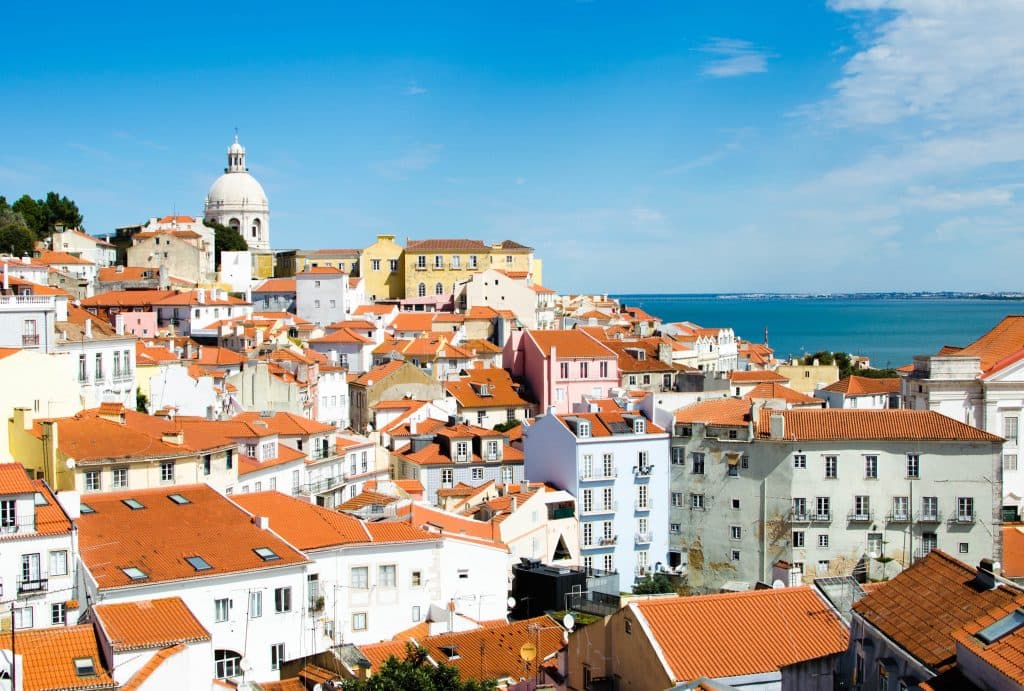
Visiting Alfama will probably tire you out. The area is located on a hill and all the streets go up and down again. The good thing about it are the views. Miraduro das Portas do Sol is one of the most famous ones. From here you can admire the views over the river and the nearby houses. It’s a very touristy spot, but it’s worth stopping here for a minute, or two.
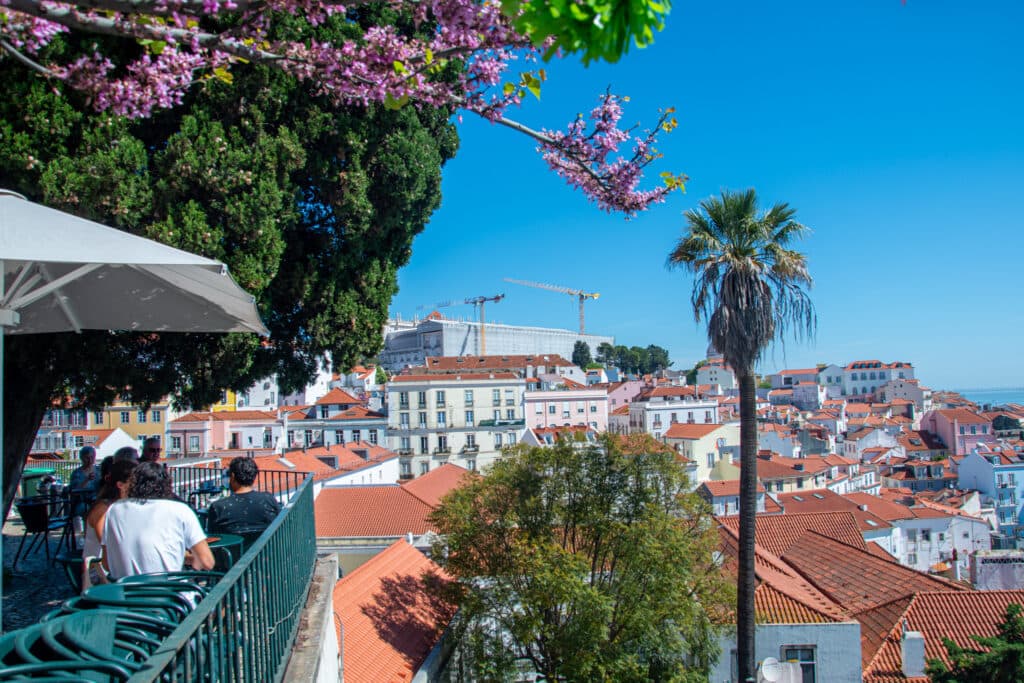
Portas do Sol means “City Gates.” In the past, during the Moorish rule, this was the entrance to Lisbon. Today, this spot is often referred to as the “balcony of Lisbon.” It features two observation decks from which you can admire the National Pantheon and the river. Here you’ll also find a solitary palm tree, which appears in virtually every photo.

This is a great spot for sunsets.
Address: Largo Portas do Sol, 1100-411 Lisboa
Miraduro de Santa Luzia
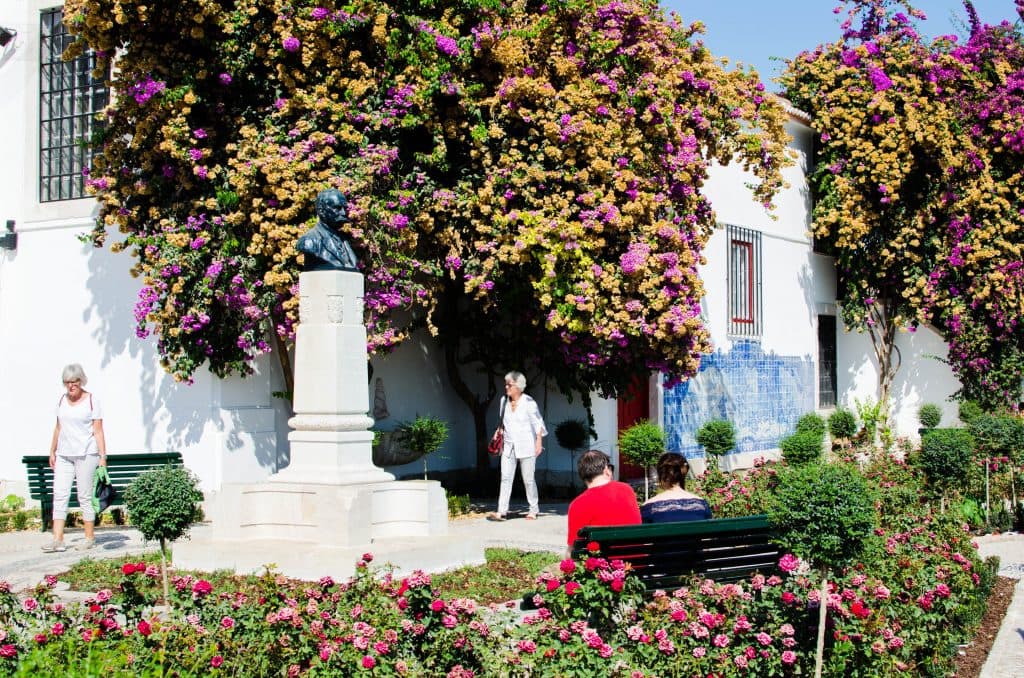
Miraduro de Santa Luzia is located just next to the Miraduro das Portas do Sol. The view from here is very impressive and the garden is stunning. There are less people at this spot than at the previously mentioned one, which makes it a nice place to unwind for a bit.
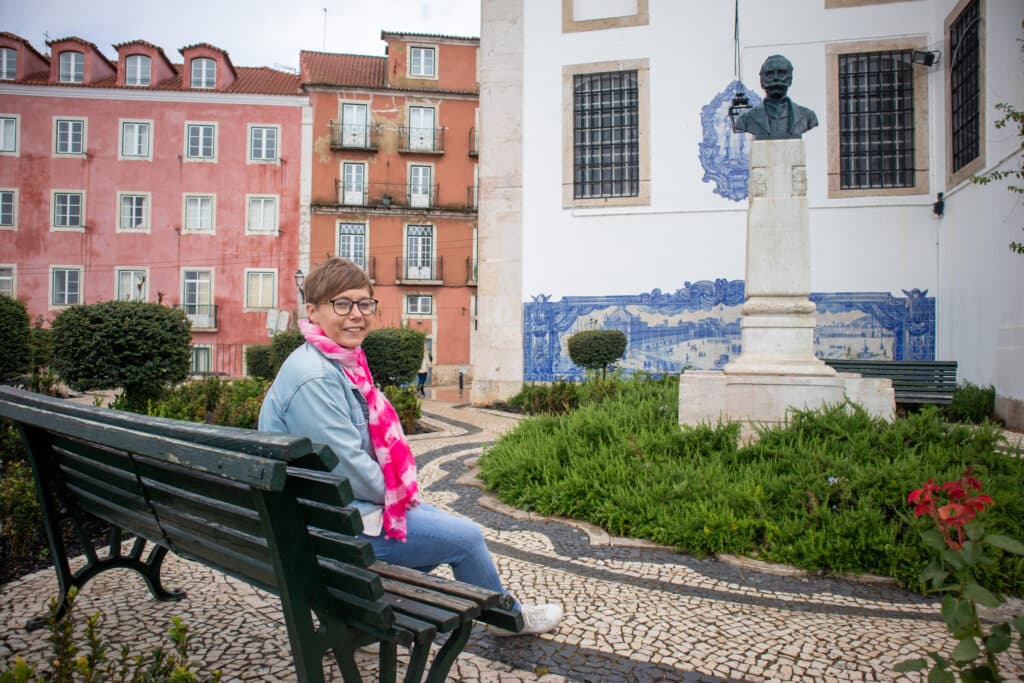
On the facade of the adjacent Church of Saint Lucy, you’ll see a blue azulejo depicting the scene of the Portuguese conquest of Saint George’s Castle. It shows the knight Martim Moniz, who used his body to block the castle gates as they were being shut. Thanks to this, the Portuguese army was able to storm inside and defeat the Moors.
The second azulejo depicts the main square—Praça do Comércio—as it appeared before the 1755 earthquake.
Address: Largo de Santa Luzia, 1100-487 Lisboa
Sé Cathedral
The Sé Cathedral in Alfama was built in the 12th century. It is therefore one of the oldest buildings in Lisbon. Neither its exterior nor its interior is as impressive as other churches in Europe, but enthusiasts of history, art, and checking off landmarks on their bucket list will certainly not be disappointed.
Construction of the cathedral began in 1147, after the area was taken from the Moors. Over the centuries, the building has undergone a series of renovations, improvements, and transformations, yet it has retained its sacred purpose.
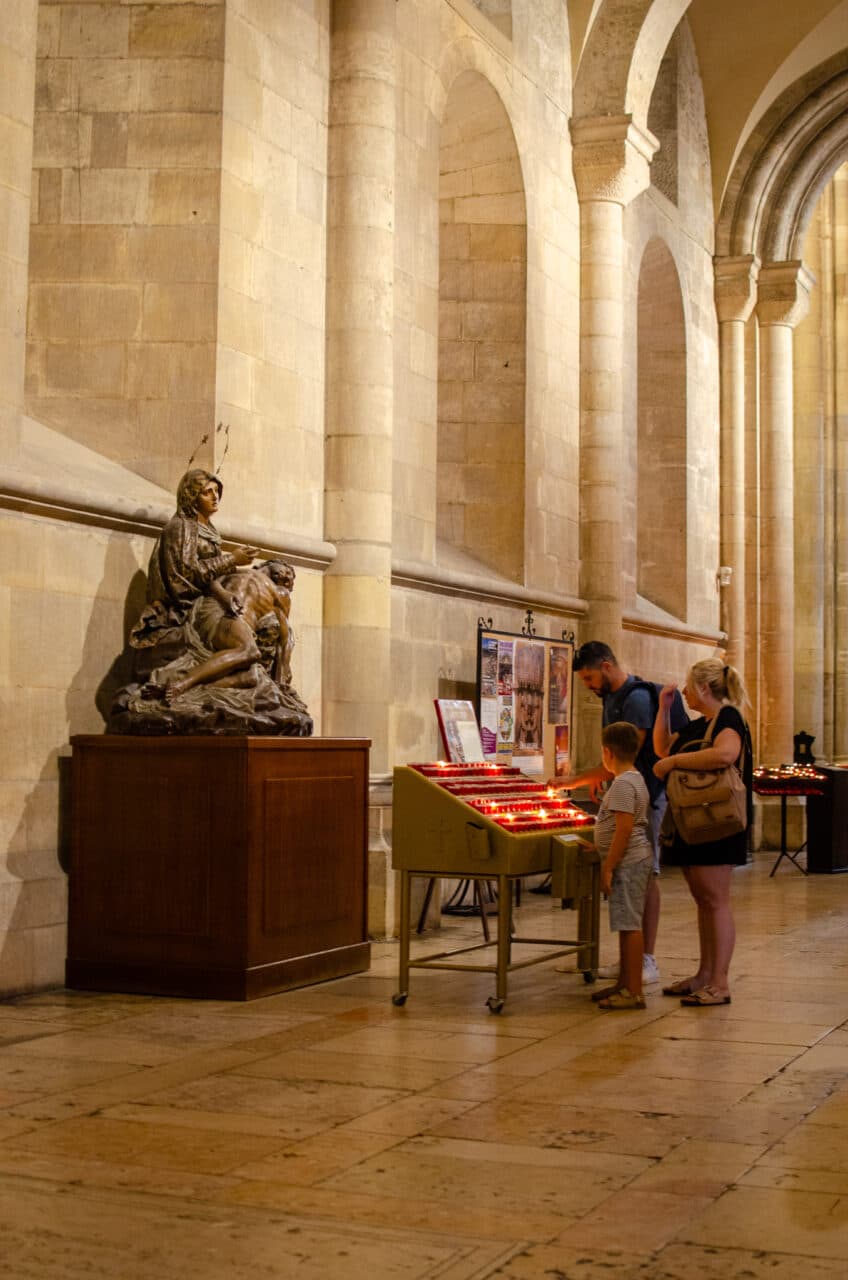
The transept has retained its Romanesque vaults, but in the 20th century, stained-glass windows depicting Saint Vincent and Saint Anthony, among others, were added here. Next to the triumphal arch, on the epistle side, there is a statue of Saint Mary Major, the patron saint of this cathedral, sculpted by Anjos Teixeira in 1909.
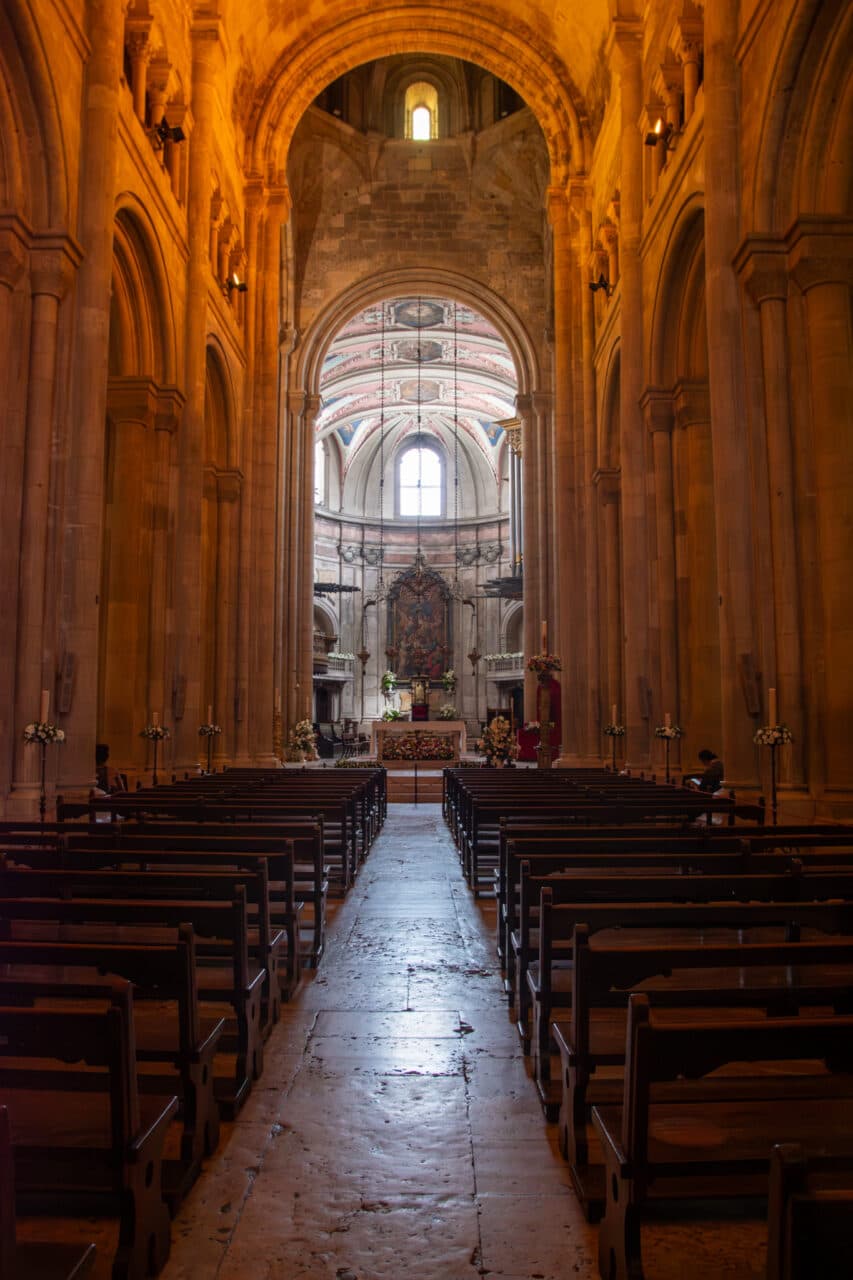
The most beautiful view of the cathedral is from the High Choir. From here, you can admire the enormous and magnificent rose window adorning the Romanesque façade, flanked by two imposing towers.
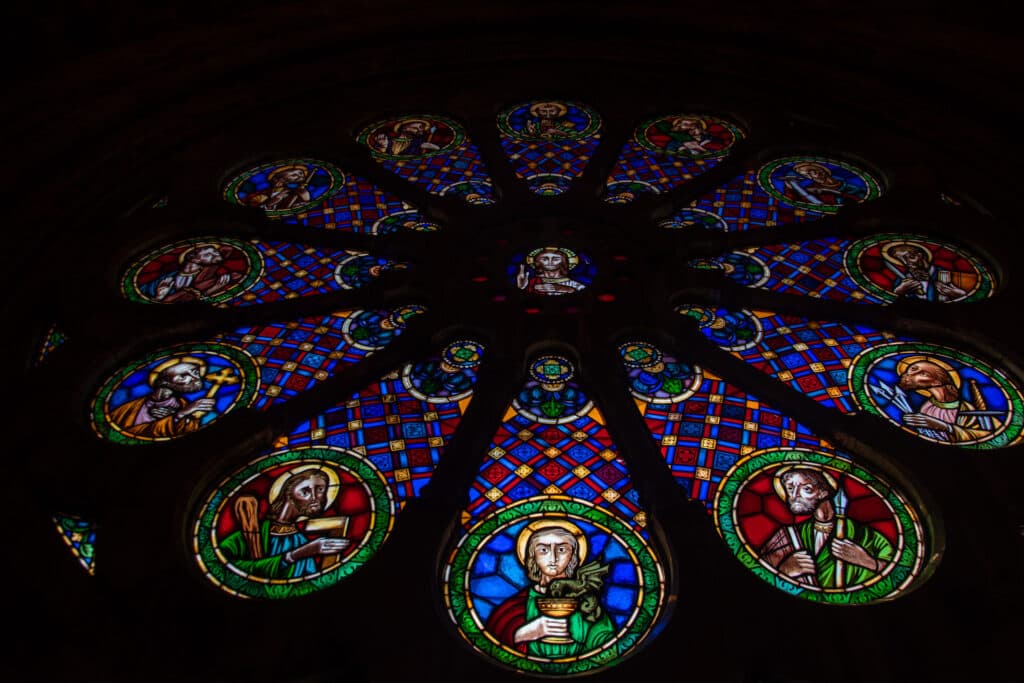
From the Upper Gallery, you can step out onto a very small and narrow balcony. The view may not be all that impressive, but from here you can see the trams passing by, which is an added attraction.
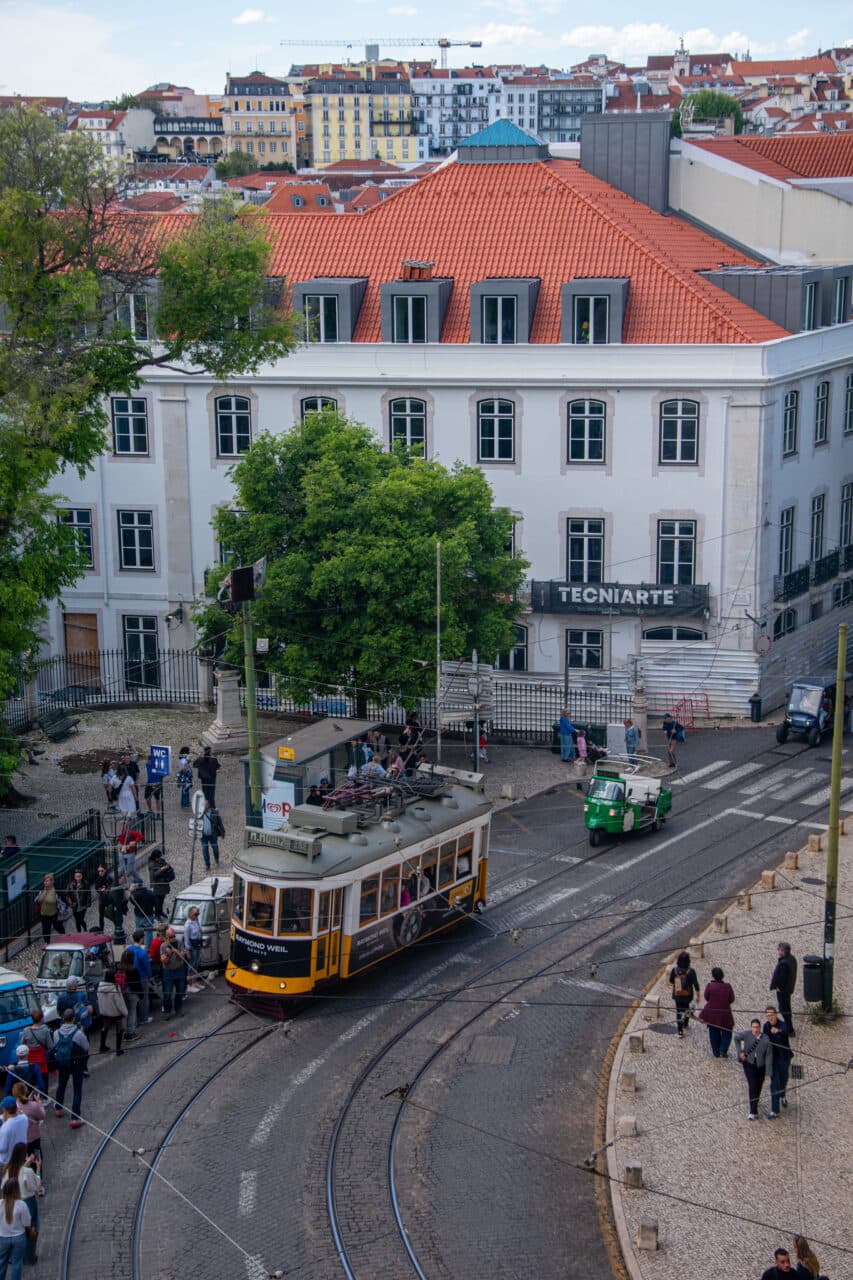
The current Baroque-style chancel was designed after the 1755 earthquake. It features a stucco ceiling formed by three-lobed rib vaults, covered with polychrome panels depicting the three persons of the Holy Trinity in the central medallions and symbols of Mary and Christ on the lobes.
The cathedral also features several chapels, including the very impressive Bartholomew Joanes Chapel with its beautiful Renaissance paintings.
Address: Largo da Sé 1, 1100-585 Lisboa
Opening hours: From Monday until Saturday from 10:00 until 6pm.
Entry: 7 Euros. You can also go to the left and walk in for free, but you’ll be only able to see the main altar.
Saint George’s Castle

If you have a bit of money to spend and some time on your hands, I really do recommend Castelo de São Jorge — the views over the city from up here are absolutely stunning. I don’t think a visit to Alfama would feel complete without seeing it. And if you’d rather skip the entrance fee, you can always just wander the surrounding streets instead.
The castle’s origins date back to around the 8th century AD, when the Moors who occupied the area built its walls. What we see today is unmistakably a Gothic castle — defined by its rectangular layout, an elbow-shaped gate, ten square towers running along the walls, and a barbican protecting the more vulnerable southeastern side. That barbican features a widened base and a moat, with medieval drawings and inscriptions still visible on it, and the castle also has albarrana-style towers as part of its defenses.
Three gates along the outer defensive perimeter allow entry into the castle, while additional gates inside the fortifications provide access to the first and second armories.
The rectangular keep has ten towers attached to the outer wall and one tower set into the inner wall, which both separates the two armored courtyards and reinforces the transitional gate on the southern side.
The barbican, positioned to the south and east, was most likely built in the 13th century. Barbicans of this type have their roots in Almohad tradition and appeared across the Iberian Peninsula around the same period — they were lower walls constructed at the most exposed points of a fortification, such as near gates or in areas where the terrain offered no natural protection. The barbican at Castelo de São Jorge, with its thickened base and moat, was placed beside the two main entrances to serve as the first obstacle for any would-be attackers.
You can explore the castle on your own or join a guided tour — check the castle’s website for guided tour times.
Address: R. de Santa Cruz do Castelo, 1100-129 Lisboa
Opening hours: Everyday from 9 until 9pm.
Entry: 31 Euros. Skip the lines and buy your ticket here.

The essential guide for a trip to Lisbon. This handy ebook guide includes everything you need to know and see in Lisbon. Discover the best sights, restaurants, cafés and accommodation in the city. Make the most out of your trip! Find out more
Take the tram 28
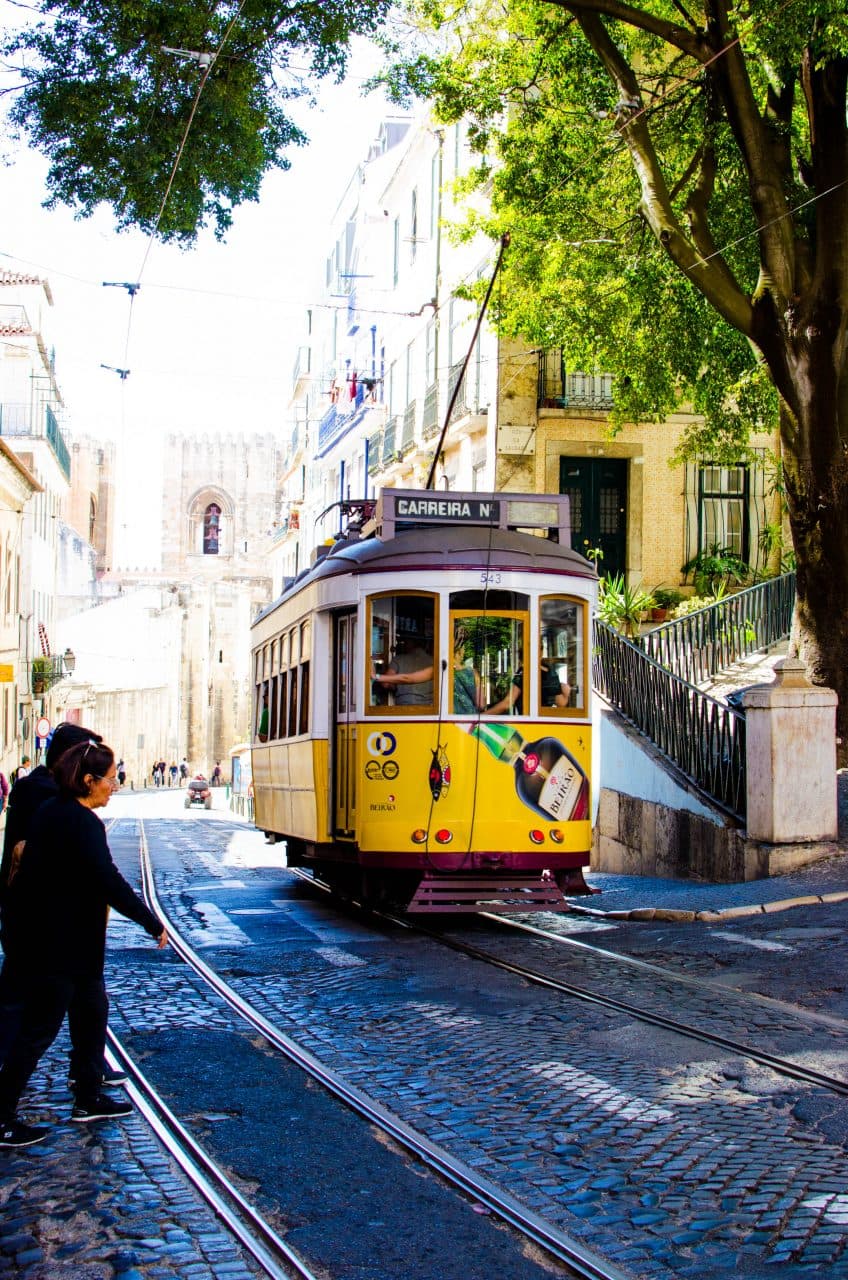
The famous Tram 28 runs through the whole of Alfama, and it really is a great attraction. The trams themselves date back to the 1930s — they were originally meant to be retired to a museum, but since they’re the only ones narrow enough to handle Lisbon’s tight tracks and alleyways (something modern trams simply couldn’t manage), they’re still running as public transport to this day.
The first stop on Tram 28 is at Martim Moniz Square, where unfortunately the queues can be enormous — you’ll often wait over an hour. On weekdays the first departure is at 5:40 and the last at 23:30, and between 9:00 and 18:00 trams leave at 06, 14, 22, 30, 39, 48, and 57 minutes past each hour. The line runs all the way across Lisbon, with the final stop at Campo de Ourique. You can check the full timetable and all stops on the website.
Personally, I’m not a huge fan of this tram — it’s always packed, and you’d need quite a bit of luck to snag a window seat. That said, I’d recommend riding it all the way to the end of the line, since most people get off in the center and it thins out noticeably. Campo de Ourique is also well worth exploring in its own right — and while you’re there, don’t miss the cemetery, which is really quite distinctive.
PRO TIP: Trams 24 and 12 are less crowded and go through the same routes.
Buy something cool at Feira da Ladra

Feira da Ladra, a thieves’ market, is a very famous flea market in Lisbon, where you can buy everything. Are you looking for stylish, old furniture? Are you collecting coins, dolls, tools? Do you like reading books? Are you looking for something unique for a present? You will find everything here!
Address: Campo de Santa Clara, 1100-472 Lisboa
Opening hours: On Tuesdays and Saturdays from 9:00 until around 5 or 6pm.
The street art
Street art deserves special mention here. You’ll find plenty of examples of it in Alfama. Look for it in the narrow streets, on the sides of houses, and on the walls of tenement buildings. Sometimes the pieces are really small, sometimes they’re quirky, and other times they take up quite a bit of space.
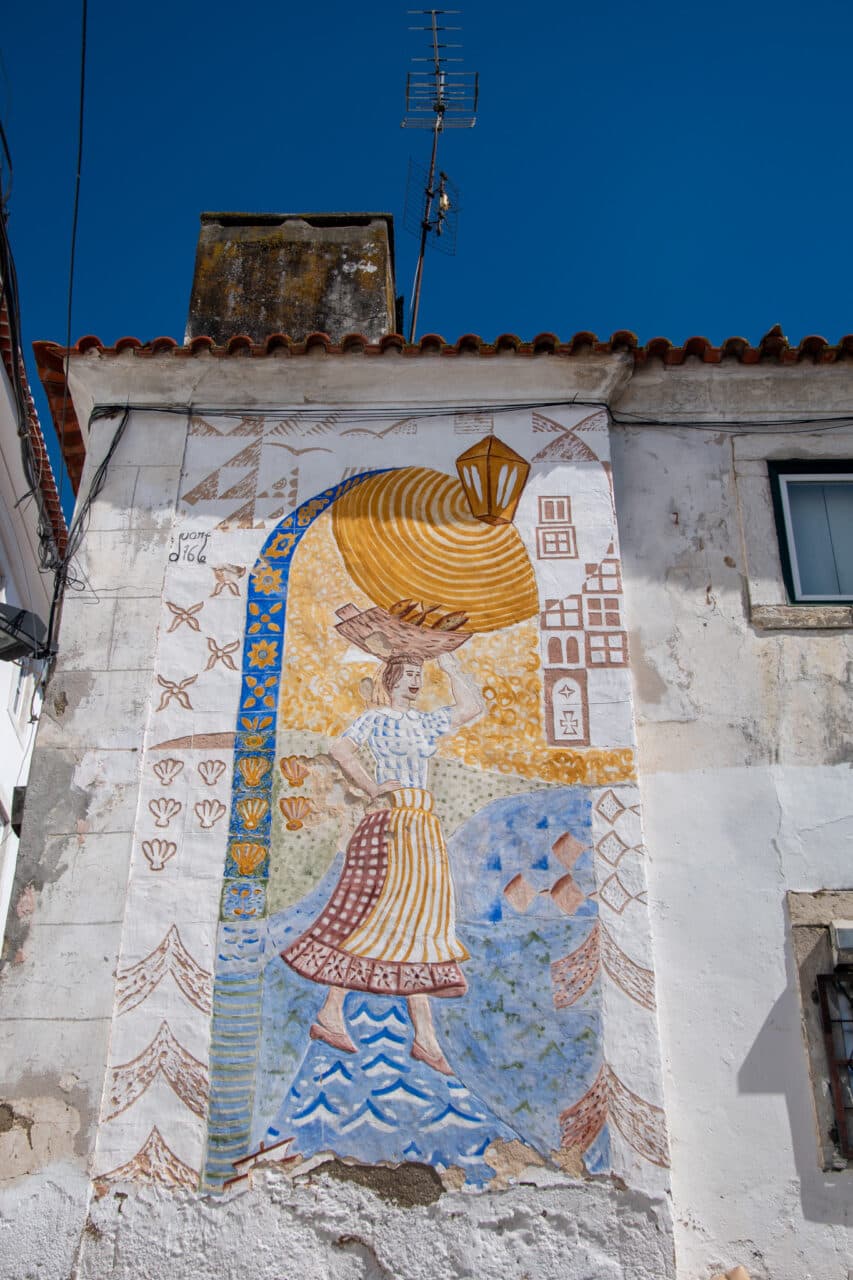
Let me list the most well-known ones that carry a bit of extra meaning.
- History of Portugal – Nuno Saraiva — tucked inside a small tunnel just below the Santa Luzia viewpoint, this mural spans the entire arch. It’s essentially a colorful comic strip telling Portugal’s history, and the tunnel itself opens up to a stunning view over Alfama. Somewhat surprisingly, there’s also a public toilet here.
- The Fishwife Mural – Beco da Corvinha — large, colorful, and painted in a charmingly rough style that only adds to its character. It shows a woman carrying a basket of fish on her head, dressed in traditional clothing. Women like her used to walk the streets of Alfama, loudly calling out to sell their catch.
- Amália Rodrigues — a portrait made from calçada portuguesa cobblestones on one of the walls, a tribute from the city to the legendary Fado singer. These days café tables have sprung up right in front of it, so you can stop, have a coffee, and take in this little work of art at your leisure.
- André Saraiva’s Azulejo Mural — colorful tiles arranged into a comic-book style, futuristic cityscape. The mural depicts Lisbon alongside other cities where the artist has lived.
Fado Concerts
Fado didn’t actually originate in Alfama but in the neighboring district of Mouraria — though Alfama is now the most famous place to go and hear it live. Concerts are usually held in small, intimate restaurants, with the ticket price typically including a glass of wine and dinner.
Fado songs tend to be melancholic, full of longing. The genre was created by women who once waited for their sailor husbands to return from voyages that could last many months.
It’s worth keeping in mind that during a concert, you don’t talk — you actually listen. Fado is not just music; it’s an experience, something felt rather than simply heard, and the performers take their craft with the utmost seriousness.
The best spots for Fado in Alfama:
- Clube do Fado
- Pastel do Fado
- Sr. Fado de Alfama
The oldest house in Lisbon
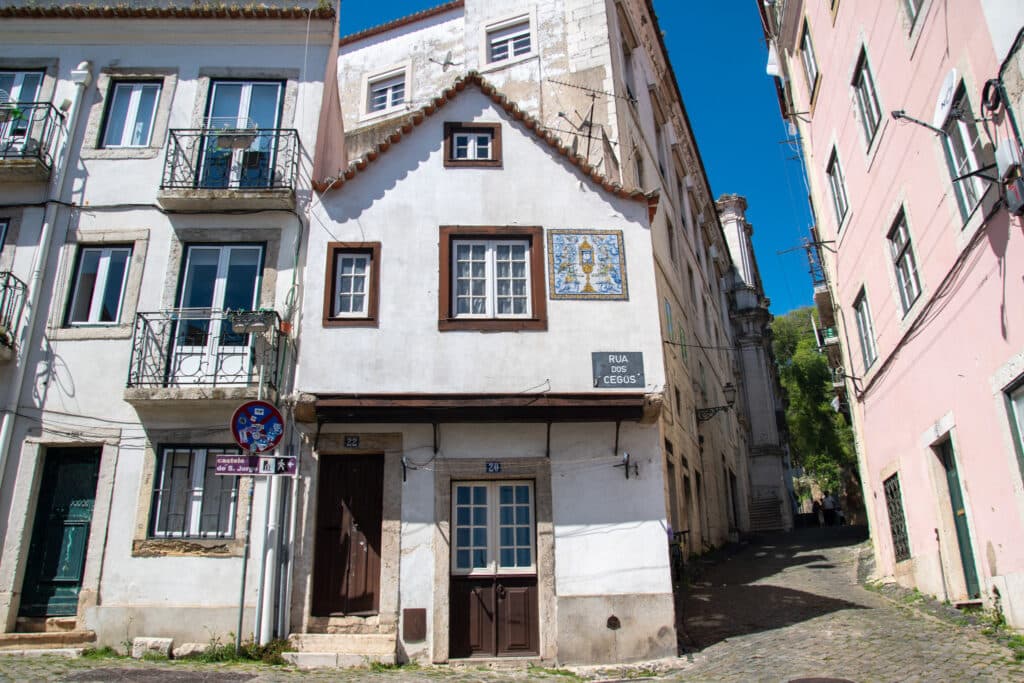
At Rua dos Cegos 20, just a short distance from the Amália Rodrigues mural, there is a tiny house that survived the 1755 earthquake. It is the oldest house in Lisbon. It is currently privately owned and not open to the public. It’s worth walking a little further uphill to explore the quiet and peaceful corners of Alfama.
How to see Alfama? – Your sightseeing plan
Alfama is best explored on foot — and very, very slowly. This isn’t the kind of neighborhood where you rush from monument to monument, ticking off attractions. Here, you simply let go. I love that about it. The moment I step into Alfama, I feel time slow down and everything in me starts to relax.
Plan for around 3 hours, though many people end up spending a full day here — it all depends on how many of the attractions you actually want to go inside.
Here’s my suggested itinerary:
- 9:00 — Start with coffee at A Bica dos Bicos or O Cofre. Don’t forget to check how to order coffee the Portuguese way!
- Walk through Arco Portas do Mar toward Sé Cathedral. Along the way you can pop into the Church of St. Francis or grab a photo in the square in front of it. Stop at the tram stop in front of Sé — this is the best spot to photograph Tram 28 rolling past. The Cathedral itself is well worth going inside too.
- Rua da Adiça is your next stop — laundry still hangs between the buildings here, and the colorful facades give the street a lovely, lived-in charm.
- Lunch — have chouriço or sardines at Lisboa Tu e Eu, and order a vinho verde to drink.
- Beco da Corvinha — home to the mural of the woman carrying a basket of fish on her head. This is how women used to sell fresh fish in the streets, apparently at considerable volume. A little further up the hill you’ll pass a small shrine to Saint Anthony. Notice the little steps beside it — children build these for Santos Populares, the popular saints festival held in June.
- Nuno Saraiva’s mural — a colorful retelling of Lisbon’s history, with a beautiful view over Alfama. There’s also a public toilet here, which is a rather unexpected place for one.
- Viewpoints — Miradouro de Santa Luzia and Miradouro das Portas do Sol. The first has a beautiful garden that contrasts wonderfully with the blue sky. The adjacent Church of Santa Luzia has two azulejo murals on its facade — one depicting the taking of Castelo de São Jorge from the Moors, the other showing Lisbon’s main square, Praça do Comércio, before the 1755 earthquake. Miradouro das Portas do Sol has two viewing terraces and a kiosk where you can grab something cold to drink. There’s also a lovely statue of Saint Vincent here.
- The oldest house in Lisbon — at Rua dos Cegos 20. It’s a private residence so you can’t go inside, but just below it is a mural by Portuguese artist Vhils, depicting the face of Amália Rodrigues, the legendary Fado singer.
- Head downhill along Travessa São Tomé toward the Fado Museum. In front of it sits the charming Largo do Chafariz de Dentro square, where older ladies sell ginjinha and where you can sit and rest for a while. The Fado Museum itself is genuinely interesting and worth going in.
- If you still have energy, head to the National Pantheon. You can take a photo outside or go all the way up to the top for panoramic views.
- Nearby you’ll also find a beautiful mural made entirely of azulejo tiles by André Saraiva, depicting Lisbon and other cities where the artist has lived.
- If it happens to be a Tuesday or Saturday, you’ll stumble upon the Feira da Ladra flea market, where you can find just about anything.
- Save Castelo de São Jorge for last — it’s a wonderful spot for sunset. You can buy tickets in advance through GetYourGuide to skip the queues, and it’s really worth doing.
- Have dinner nearby at O Chapito — but make a reservation first!
Here’s the whole map of the walk:
PRO TIP: I recommend exploring Alfama first thing in the morning and actually setting aside the whole day for it. It’s also not worth taking tram 28 during rush hour. You can skip it altogether or take tram 24 instead. The viewpoints are also perfect for watching the sunrise. Early in the morning, there are hardly any people there at all.
Book Tickets & Activities With GetYourGuide
For skip-the-line tickets, day trips, and activities, I use GetYourGuide — easy to compare options, mostly free cancellation, and it’s saved me from queues more than once.
Browse Activities on GetYourGuide →Affiliate link — booking through it supports the blog at no extra cost to you.
Alfama – What and where to eat?
Breakfast — I think it’s worth starting with something that’ll keep you going for a good few hours. My recommendation is either avocado or salmon toast at The Folks Blue Street, or something more traditional and sweet at Portela Baixa. Both places also do excellent coffee.
Lunch — I’d suggest Lisboa Tu e Eu, a small restaurant serving Portuguese food in tapas style. Order a few dishes to share — I recommend pica pau, sardines, and chouriço, with a glass of vinho verde to wash it all down. Another great option for lunch or dinner is Santa Rita, where I’d highly recommend the prawns in curry sauce. Absolutely delicious.
Snacks — if you’re in the mood for something in between, during summer pop into Ginjinha da Sé, a charming little spot tucked into a characterful side street. It’s run by two French women and also serves Portuguese petiscos — essentially tapas.
Afternoon drinks and a bite — Damas is a great shout. It’s a stylish, relaxed spot for anyone who appreciates good food and unique interiors — a real breath of fresh air in the old Alfama. Order the fried eggs with potatoes, olives, bread, and hummus. You won’t regret it.
Dinner — O Chapito is well worth it. The prices are higher, but the food is excellent and the views alone justify the bill.
And for an evening to remember — Alfama is one of the best places in Lisbon to hear real Fado, the music that has its roots right here in these streets. Clube do Fado is a legendary venue. Book a table, have dinner, and let the music do the rest.
How to get to Alfama?
If you need to take public transportation, the metro is your best bet. There are two stations on the blue line near Alfama: Santa Apolonia, from which you can walk to the Pantheon, and Terriero do Paço, which is closer to the Sé Cathedral.
Trams 28 and 24 also run through Alfama.
Read my guide on transportation in Lisbon.
Alfama – Where to stay?
It’s very easy to find accommodation in Alfama. The price, however, can be an issue. Rates per night here are quite high. Most of the options available here are apartments and rooms in private homes. If you prefer something further from the center, you’ll definitely pay less. The main advantage of staying in Alfama is definitely its atmosphere. It can actually be very romantic to wake up in a small apartment on one of the streets. On the other hand, it’s a very touristy, crowded neighborhood and can get quite noisy.
PRO TIP: Avoid staying in Alfama in June. The entire month is dedicated to the Santos Populares festival, a time of huge street parties. It gets really loud all night long.
Lower Alfama, at the foot of the hills, is definitely a bit quieter. Here, it’s easier to find some peace and quiet, and there may be fewer people passing by your window. Up in the higher part, it will be more crowded, but it’s also easier to get around.
I recommend staying in Alfama to couples, as well as young people or those traveling alone or in a group of friends. I would definitely advise against staying there for families with small children. Climbing that many stairs every day would be very taxing.
A night in Alfama can cost between 100 and 150 euros (price as of 2026).
Here are my recommended places to stay in Alfama:
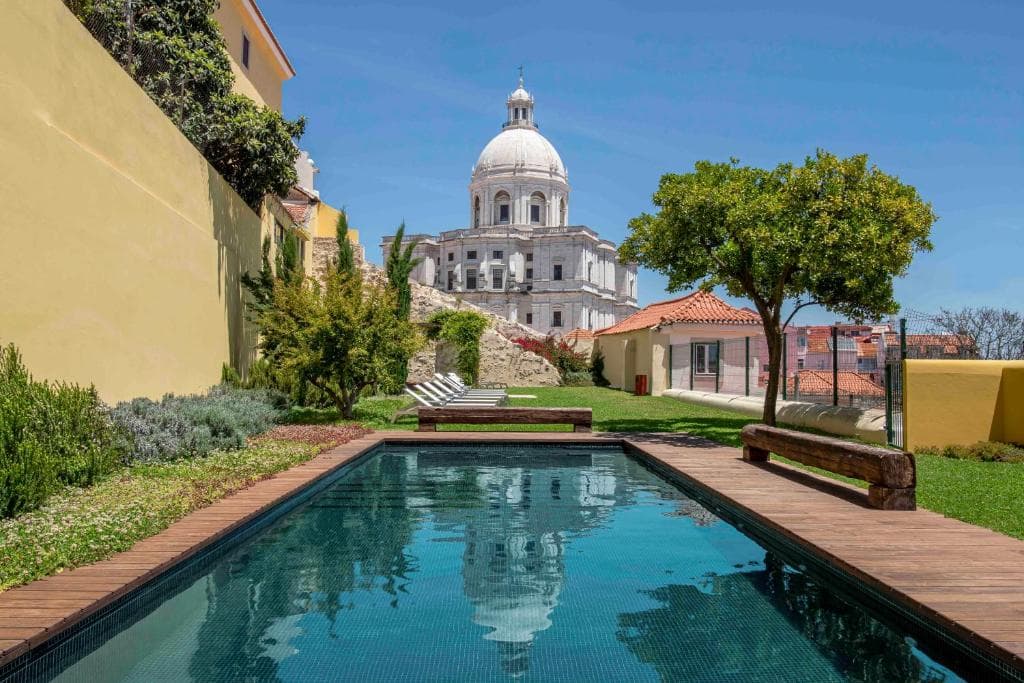
- Tandem Palacio Lisboa
- Lisbon Best Choice Apartments
- Pousada Alfama
- Alfama Terrace 360
- Tiny Gem Alfama
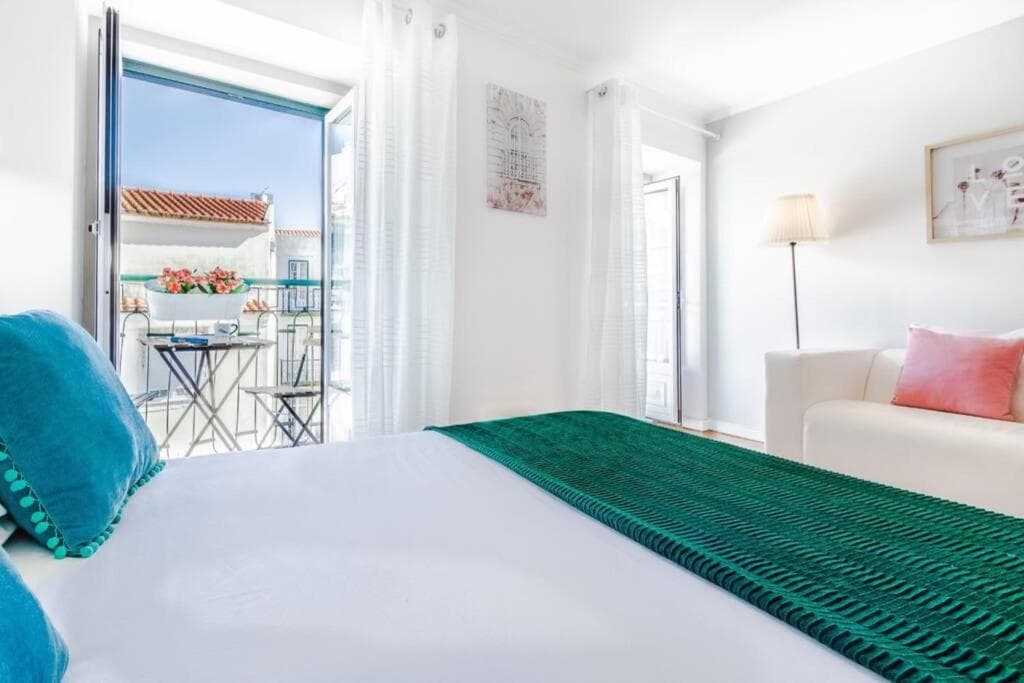
My choice: Alfama Best Balcony is a small apartment with a lovely balcony. The price is good and the place is a great stay for couples.
FAQs about Alfama
Is Alfama safe? Very much so. The only real issue is pickpockets on Tram 28 — keep an eye on your belongings there.
How long does it take to explore Alfama? Allow at least 3–4 hours as a minimum, though ideally a full day if you’re including restaurants.
Is Alfama accessible for people with limited mobility? Unfortunately not — steep stairs, cobblestones, and no lifts make it quite challenging.
Where are the best views? Miradouro das Portas do Sol (especially at sunset!) and the Castle, which offers a full 360° panorama.
Is it worth staying overnight in Alfama? Yes, if you love an authentic atmosphere and don’t mind music playing late into the night.
Where can I buy Tram 28 tickets? At kiosks, ticket machines, or with a Lisboa Card.
Are restaurants expensive? It depends — a traditional tasca will run you around €10–15, while slightly more upscale places tend to be €20–30 per person.
Summary – Is it worth visiting Alfama in Lisbon?
Alfama is my favorite place in Lisbon. Even after living here for seven years, I still discover new nooks and crannies every day. If you only have one day in Lisbon—spend it in Alfama. This is where you’ll feel the true soul of the city.
Remember: you don’t just visit Alfama—you experience it. Get lost in the narrow streets, sip some ginja, and listen to fado. Only then will you understand why this neighborhood is so special.
Have any questions? Leave a comment!