
Travel
Bairro Alto and Chiado: A complete guide to the best areas in Lisbon
Destinations

Joanna Horanin
Current condition

Weather in Lisbon
Partly Cloudy
Temperature
Feels like 13.6℃ 😩
UV index
Low
Air quality index
Good
Last updated at 08/04/2026, 22:15
Hi, I'm Joanna, the author of The Blond Travels. In the worlds of Thailand and Portugal, I feel like a fish in water - and it's no coincidence! I've been exploring Thailand for over a decade, and I've settled in Portugal for 6 years now. My mission is to support Dreamers - just like you - in discovering these fascinating countries and helping those in love with them find their own place on Earth, preferably for good! Let's uncover these unique corners of the world together.
- Bairro Alto and Chiado – What’s the difference?
- How to get there and how to move around?
- What to see in Chiado?
- What to see in Bairro Alto?
- Lifts and funiculars – How to get from one level to another?
- Night life – Bairro Alto after sunset
- Bairro Alto – What and where to eat?
- Where to stay in Bairro Alto?
- Visiting Bairro Alto and Chiado – Practical Tips
- FAQ – Bairro Alto and Chiado
Lisbon welcomed me nearly 10 years ago with sunshine and breathtaking views. When I first visited Rossio Square and Praça do Commercio, I was captivated. The beautiful yellow buildings, glistening in the sun, provided a wonderful contrast to the blue sky. I will remember that view and that feeling forever. My first walk took me through the neighborhoods of Bairro Alto and Chiado. I strolled along the cobblestone streets, snapping photos at every turn. I couldn’t believe I was actually living in Lisbon! Today, I visit these neighborhoods quite often, and even though they’re very touristy and crowded, I still find them charming. In this article, I’ll take you on a walk through Lisbon’s main neighborhoods—Bairro Alto and Chiado. You’ll learn what to see and how to explore, where to eat, and how best to experience the atmosphere of both areas.
Bairro Alto and Chiado – What’s the difference?
Bairro Alto and Chiado are located very close to each other. It’s easy to confuse them, even though they have completely different characters.
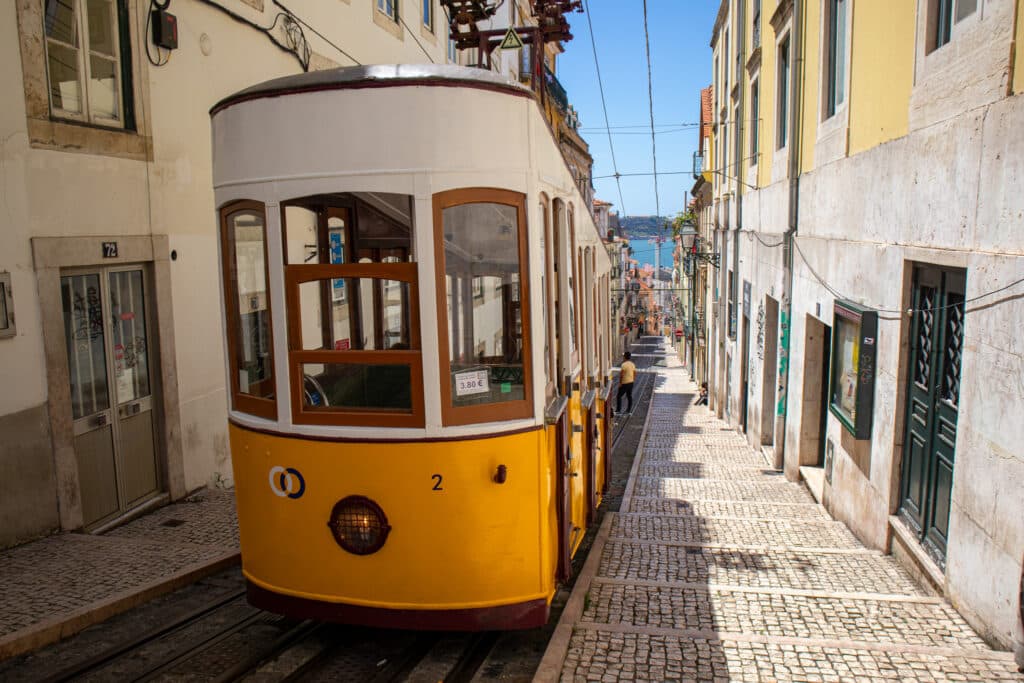
Bairro Alto consists of narrow streets winding up one of the hills. There are residential buildings here where locals still live (though this is becoming increasingly rare due to rising rents and noise). It is also a neighborhood famous for its nightlife, bars with cheap drinks, and small eateries serving Portuguese specialties.
Chiado, on the other hand, is a slightly different neighborhood. It is characterized by greater elegance, the presence of cafés, but also by history, as this is where the writer Fernando Pessoa, beloved by the Portuguese, used to stop for coffee. You can also go shopping in Chiado—you can visit popular chain stores or stock up on delicacies at local grocery stores.
How to get there and how to move around?
Bairro Alto and Chiado are right in the heart of Lisbon, and it’s really easy to get there. You might even decide to stay right here.
There are plenty of metro stations in the area. The most popular ones are on the blue line: Terreiro do Paço, Baixa Chiado, Rossio, or Cais do Sodré, which is on the green line. If you want to get off right in the city center, Baixa Chiado is your best bet.
Tram 28 also runs along the main streets and is a tourist attraction in its own right.
In addition, you can always grab an Uber or Bolt, though keep in mind that traffic jams are common here, and Lisbon’s narrow streets slow down traffic. Sightseeing tuk-tuks will also take you on a tour through the streets of Bairro Alto and Chiado.
Find out more about transportation in Lisbon.
PRO TIP: Wear comfortable shoes. The streets of Lisbon are always going up hill and you’ll be walking a lot. Find out more here about what to pack for a weekend in Lisbon.

Elegant and enduring. A suitcase that will make your trip so much easier!
Order now with 15% off with the code: THEBLONDTRAVELS
Order on Level8 website or on Amazon.
What to see in Chiado?
Praça do Camões
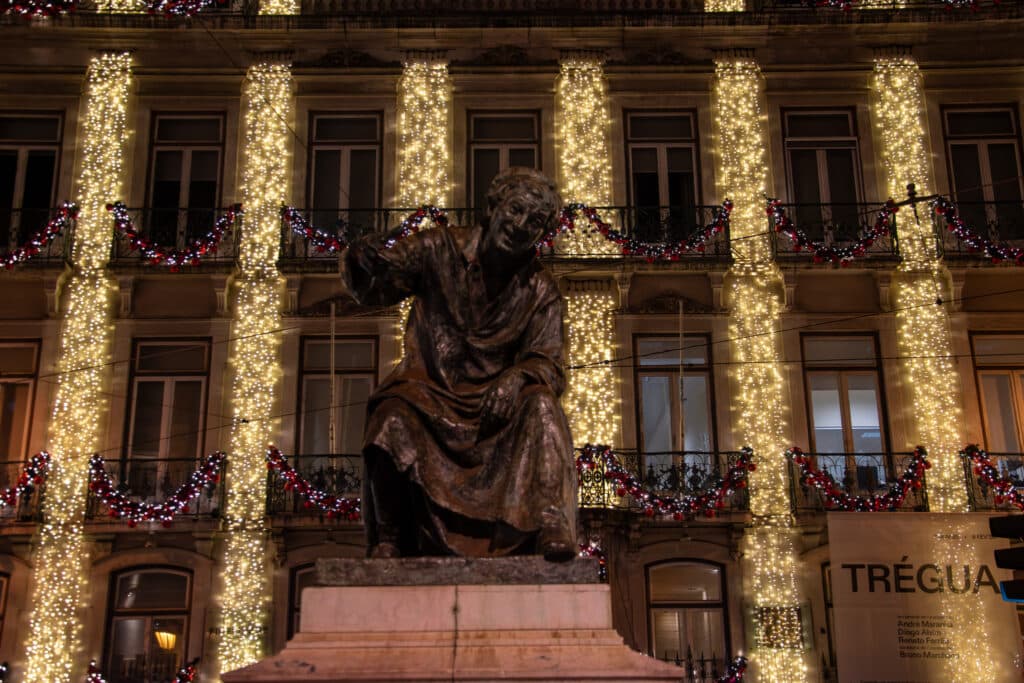
Every stroll through Chiado eventually ends at this square—and that’s a good thing, because it’s the perfect spot to sit down for a moment and soak in the atmosphere of the city. In the center stands a statue of Luís de Camões, Portugal’s most important poet and author of the epic poem *Os Lusíadas*. The bronze figure is 4 meters tall and surrounded by eight smaller figures—prominent chroniclers and poets from the 15th and 16th centuries. The entire monument was unveiled in 1867 and remains one of the oldest of its kind in Lisbon.
But honestly? I’m more drawn to this square for its atmosphere than its history. It’s one of those places where Lisbon lives at its own pace—locals drink coffee, tourists look for the perfect shot, and trams pass by as if nothing’s happening. If you’re starting your tour of Chiado, start right here.
Find out more about what to see and do in the centre of Lisbon.
Café A Brasileira and the statue of Pessoa
If I had to pick one place in Chiado that you absolutely must see, this is it. Café A Brasileira opened in 1905 and from the very beginning was more than just a café—it was a gathering place for lawyers, artists, writers, and all of Lisbon’s intellectual bohemia. It was here that Fernando Pessoa would regularly sit in a quiet corner, observing and writing. Today, he sits in front of the café forever—in the form of a bronze sculpture on the esplanade, where everyone takes photos. Inside, you can see his original glasses and a rare first edition of *Mensagem*—the only book he published in Portuguese during his lifetime.
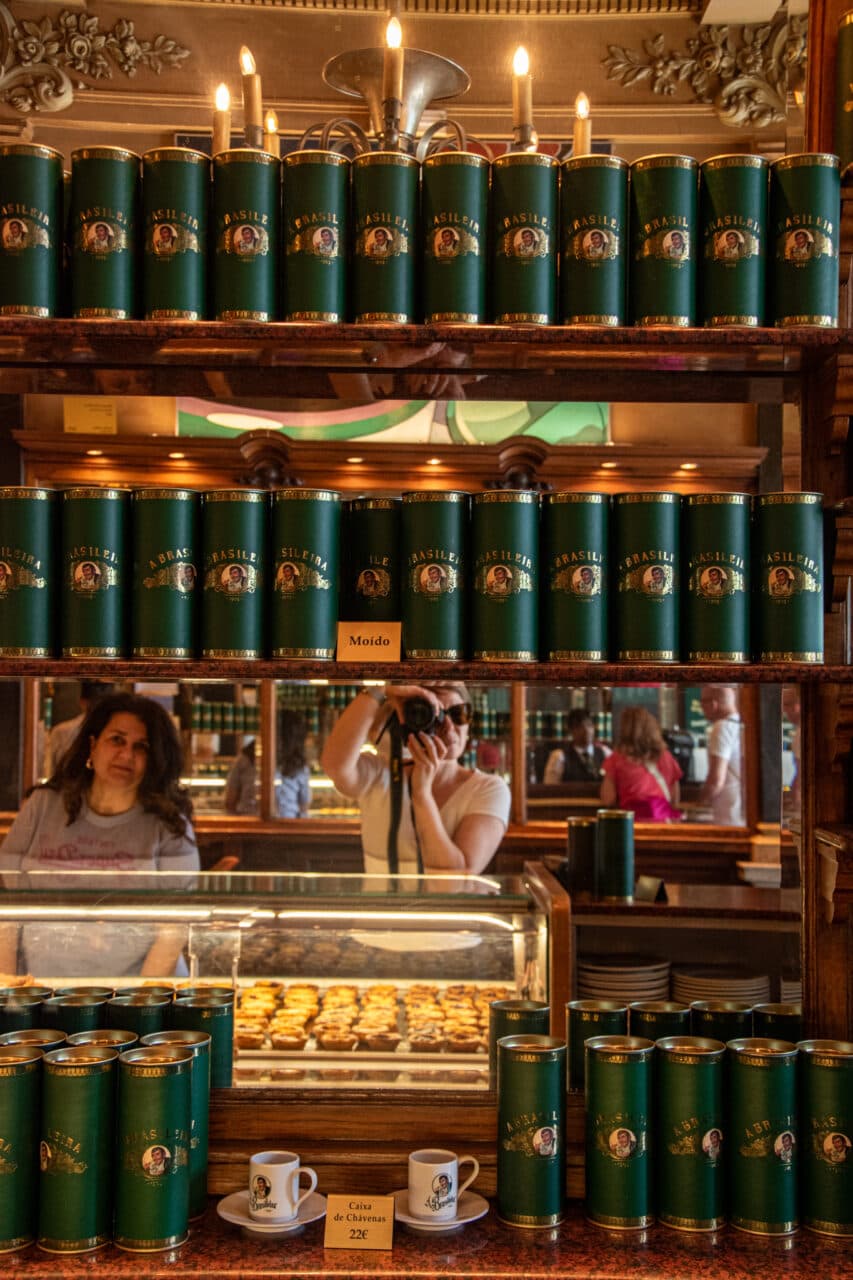
Here’s an interesting fact you’ll rarely find in guidebooks: the café’s owner, Adriano Telles, returned from Brazil with an idea to promote Brazilian coffee among the Portuguese—and to encourage people to drink it, he gave it away for free to anyone who bought other products. It worked. By the way—it is said that the word “bica” was born right here at A Brasileira, because the coffee flowed directly from the machine’s spout (Portuguese: bica) straight into the cup. Today, it is one of only three historic cafés in Lisbon that have survived the entire 20th century.
Livraria Bertrand
It is the oldest operating bookstore in the world—officially recognized by the Guinness World Records—and has been selling books continuously since 1732. It has weathered an earthquake, a civil war, a regicide, the establishment of a republic, and the rest of Portugal’s history, and it is still here today.
The entrance on Rua Garrett leads through seven rooms, each dedicated to a different writer—Aquilino Ribeiro, José Saramago, Eça de Queirós, Almada Negreiros, and others. Each room has a dedicated bookshelf and a plaque detailing the author’s history. If you enter from Café Bertrand on Rua da Anchieta, you’ll be greeted by a huge mural of Fernando Pessoa. The seventh room—a former warehouse—is named after him.
The hallway connecting all the rooms is an attraction in its own right—it’s decorated with paintings and documents that tell the story of the bookstore over the centuries. Among other things, you can find an excerpt from a letter written by Almeida Garrett to the Bertrand brothers.
A word of advice: Bertrand is a must-visit for anyone who even slightly enjoys books. Even if you don’t buy anything, it’s worth going inside, walking through all the rooms, and feeling that you’re standing in a place where people have been coming for words for nearly three centuries. On the other hand, if you’re expecting a beautiful bookstore, you might be disappointed. The rooms here look like an ordinary store and aren’t anything special.
What to see in Bairro Alto?
Convento do Carmo
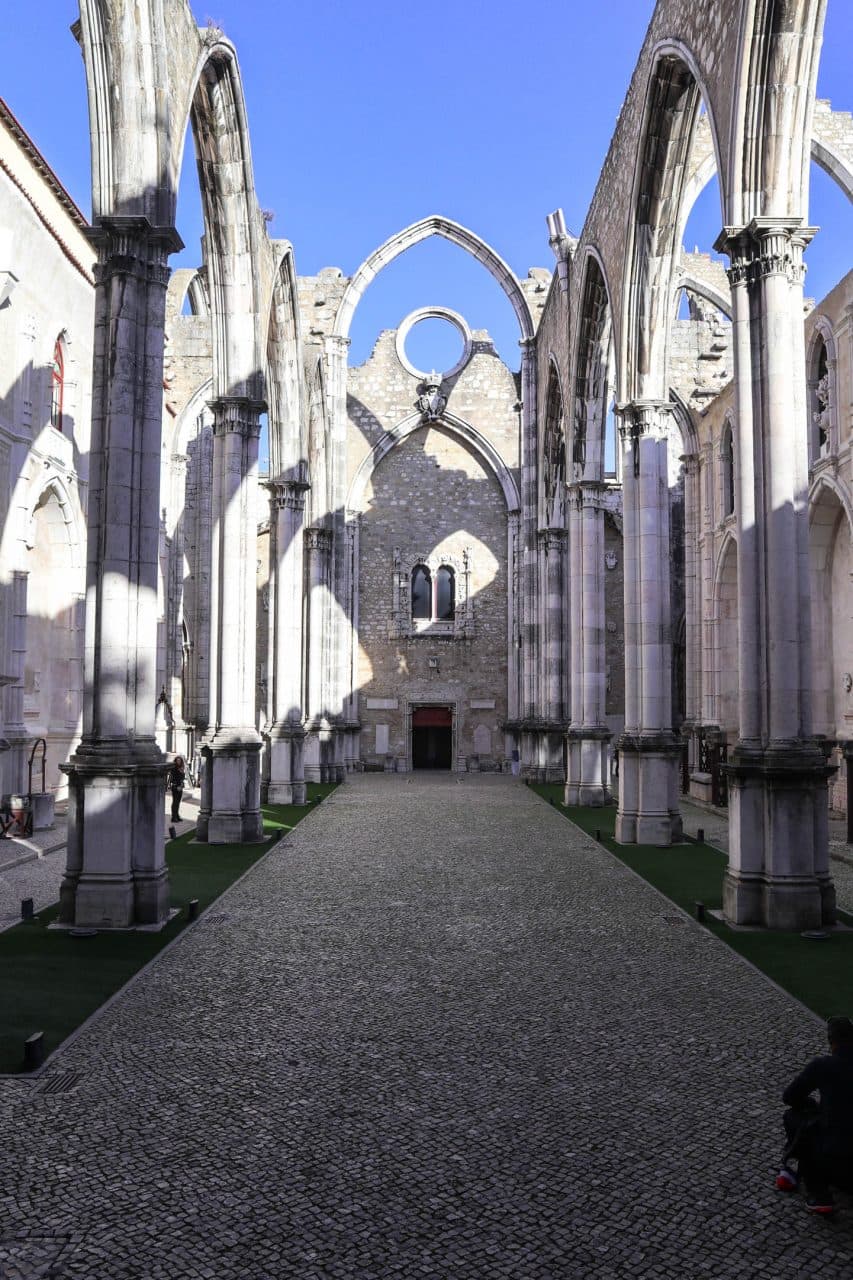
This place made a big impression on me during visiting Bairro Alto. The medieval monastery of Carmelites was destroyed during the famous earthquake in 1755. Until now it hasn’t been restored and is a live proof of those events.
There is also an archeological museum in the area, where you will find very interesting artifacts. Unfortunately, they are not described and there’s no information, but it’s really worth having a look nevertheless.
Entrance: 7 Euros
Igresa and Museu Sao Roque
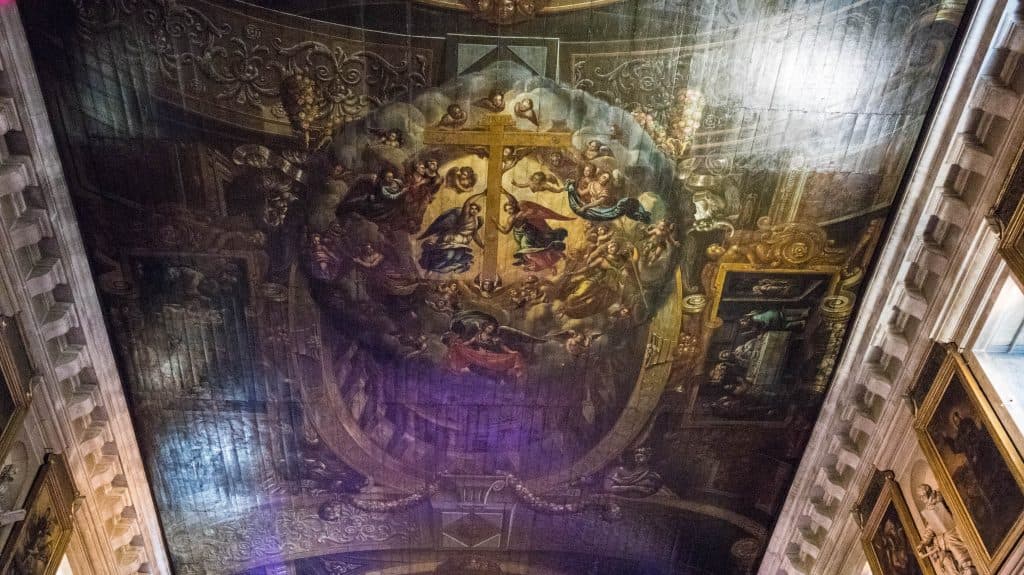
This little church was on my list of things to see, but I wasn’t that keen on going there. There are many churches in Lisbon and I thought it was going to be ok if I miss this one. It’s actually lucky that I went there at the end because Sao Roque is very charming and has one of the most beautiful ceilings! During my visit there was a rehearsal for a nativity scene and I couldn’t take that many photos. I was just standing there and looking up until my neck started to hurt.
Entrance: free
Miraduro De Sao Pedro de Alcantara
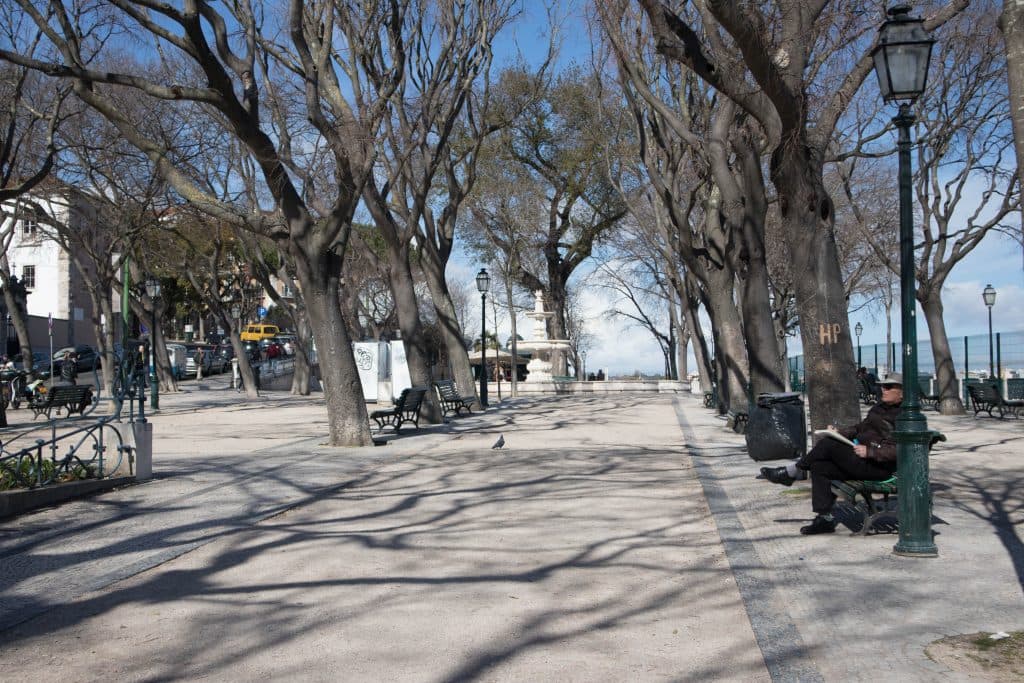
Another one of my favorite spots in the city. I really like coming here because there is a small kiosk with coffee just around the corner and there are not that many tourists, especially in the winter. I also spent the New Year’s Eve here and I recommend coming here during that time. You can party for free and admire the city.

Make your holidays even more memorable! Go off the beaten path, discover all the hidden gems, eat where the locals eat. Get Your Guide organise custom tours with independent guides to create really special memories for you. Book your tour now!
Elevador da Gloria
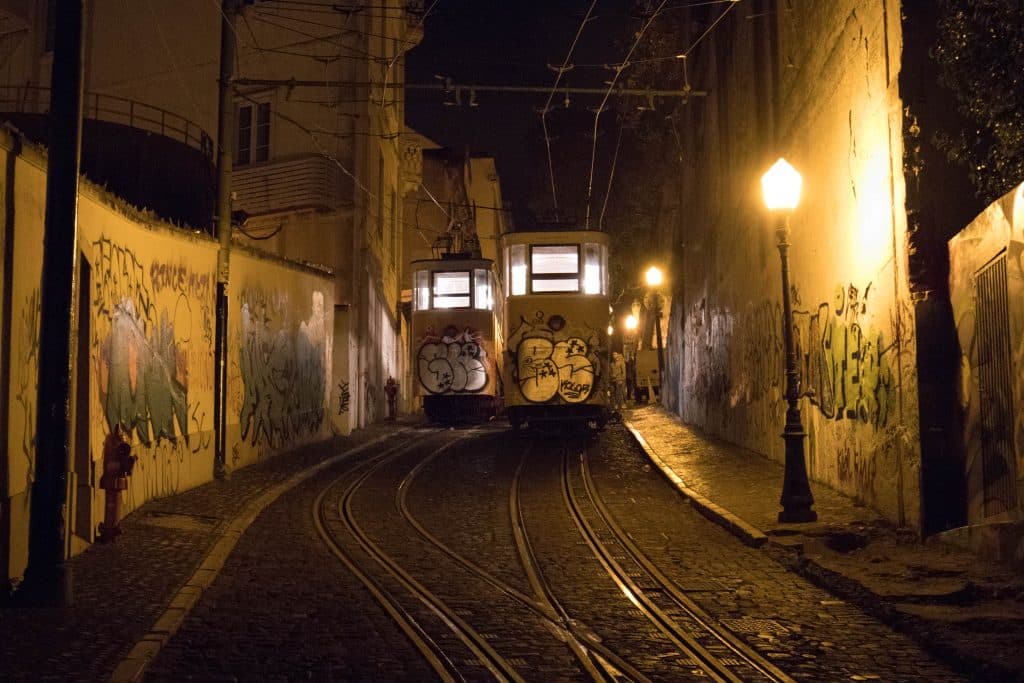
Among things to see in Bairro Alto this is probably one of the most special ones – a small tram with only one carriage, which goes up and down on the hills of the city. In the past, this used to be a very convenient way for locals to get to their homes. Today Elevador da Bica is a tourist attraction and really amazing fun for visitors. The ticket costs 3 Euro – a bit much for such a short distance, but riding one of these trams is a must thing to do in Lisbon.
Ticket: 3.70 Euro
Embaixada Concept Store
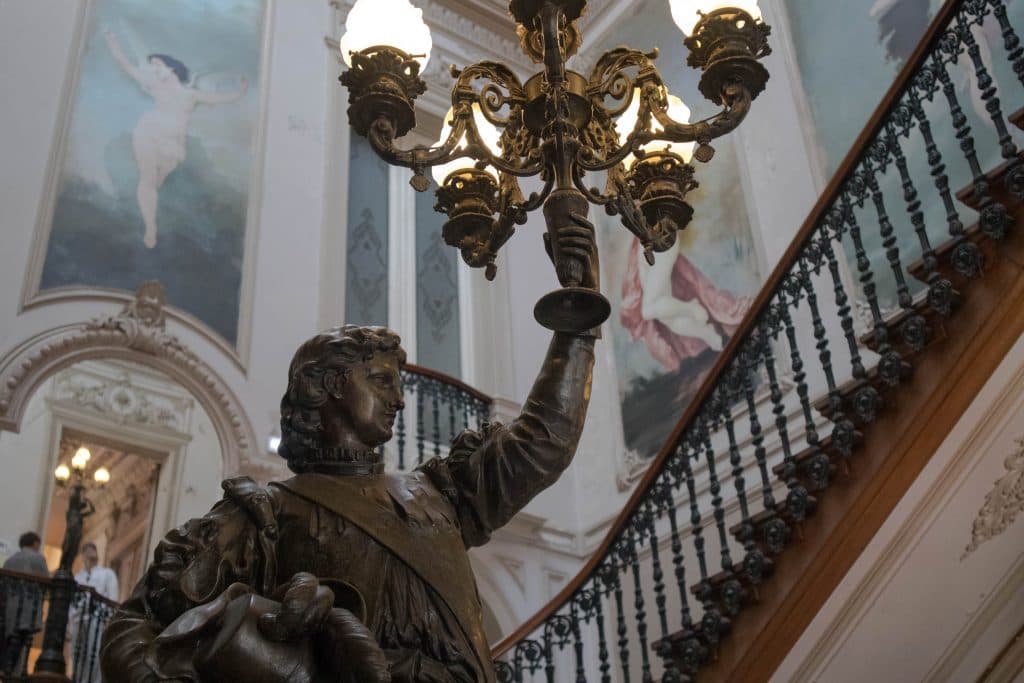
It’s one of the newest attractions in Lisbon. During your visit in Bairro Alto, don’t miss this small and very stylish shopping center. All the shops here sell handmade clothes and home decorations. The stock cannot be found anywhere else. Of course, you will have to pay a higher price for it and not everyone can afford that. However, you can still come here and admire the stores and the decor.
Jardim de Principe Real
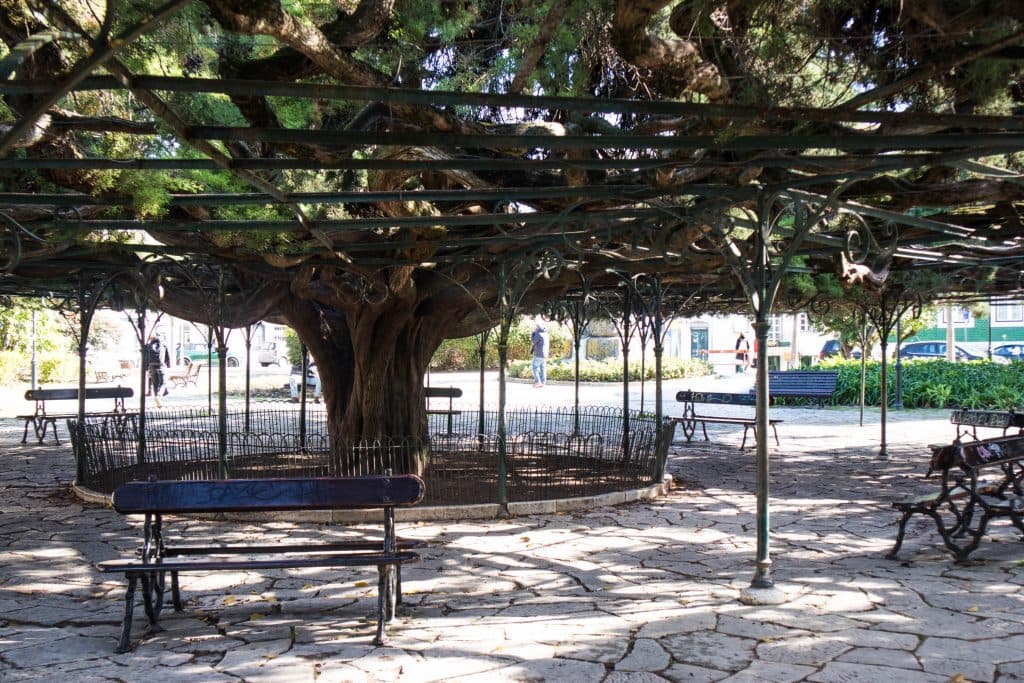
A very lovely park located near Miraduro De Sao Pedro de Alcantara and opposite Embaixada. The main attraction is a huge tree under which you can sit on a bench. It’s also a good place for families with children.
Jardim Botanico de Lisboa
It’s one of those places that most tourists simply overlook—and quite unfairly so. The Lisbon Botanical Garden has been around since 1873 and, over the years, has grown into one of the most beautiful green spaces in the entire city. It’s located in Príncipe Real, just a stone’s throw from the Embaixada and Jardim do Príncipe Real, but somehow rarely makes it onto lists of attractions. It has held the status of a National Monument since 2010.
Discover the most fascinating sights and attractions with the amazing Lisbon City Card! See all the attractions you have access to. Choose a 24-, 48-, or 72-hour card that gives you access to Lisbon’s public transportation network. Enjoy free admission to iconic sites like the Jerónimos Monastery, museums, palaces, and much more! Hop on CP trains and take an exciting day trip to beautiful Sintra and Cascais. -> Buy your card here.
Inside, you’ll find palm trees from every continent, tropical plants from New Zealand, Australia, China, and South America, as well as cycads—living fossils, some of which have survived only thanks to botanical gardens. Admission to the upper part of the garden is free, but there is an admission fee for the lower part (the Arboretum). A small practical note: in the summer, the garden is intentionally not watered heavily and may look less lush than you expect—this is a deliberate choice, not neglect. If you’re looking for a moment of peace away from the crowds of Chiado, this is where you’ll find it.
Lifts and funiculars – How to get from one level to another?
PRO TIP: In 2025 the Gloria Funicular had an accident in which a lot of people died. Since then all the lifts and funiculars have been out of service.
Elevador da Bica
The Elevador da Bica is my favorite of all Lisbon’s funiculars—and I don’t think I’m the only one, because there’s always a line of people waiting to take a photo here. It opened in 1892, was designed by the same engineer who designed the Elevador da Glória—Raoul Mesnier du Ponsard—and has since connected Rua de São Paulo with Largo do Calhariz, traversing one of the city’s steepest slopes. It has held the status of a National Monument since 2002.

There is one thing that sets the Bica apart from the other funiculars in Lisbon: part of the route runs literally down the middle of a street shared with cars—the only such case in Portugal. The exit from the lower station is also a bit tricky, as you exit through the back of the building on Rua de São Paulo, as if through the rear of a private townhouse. A ticket costs 3.90 euros. A quick practical note: the funicular is closed for a few weeks each year for maintenance, usually in the winter—it’s worth checking before your visit.
Elevador de Santa Justa
The Santa Justa Elevator is one of those sights that stick in your mind—an iron Gothic tower rising up between the townhouses of Baixa, as if someone had plucked it from another city and set it here.
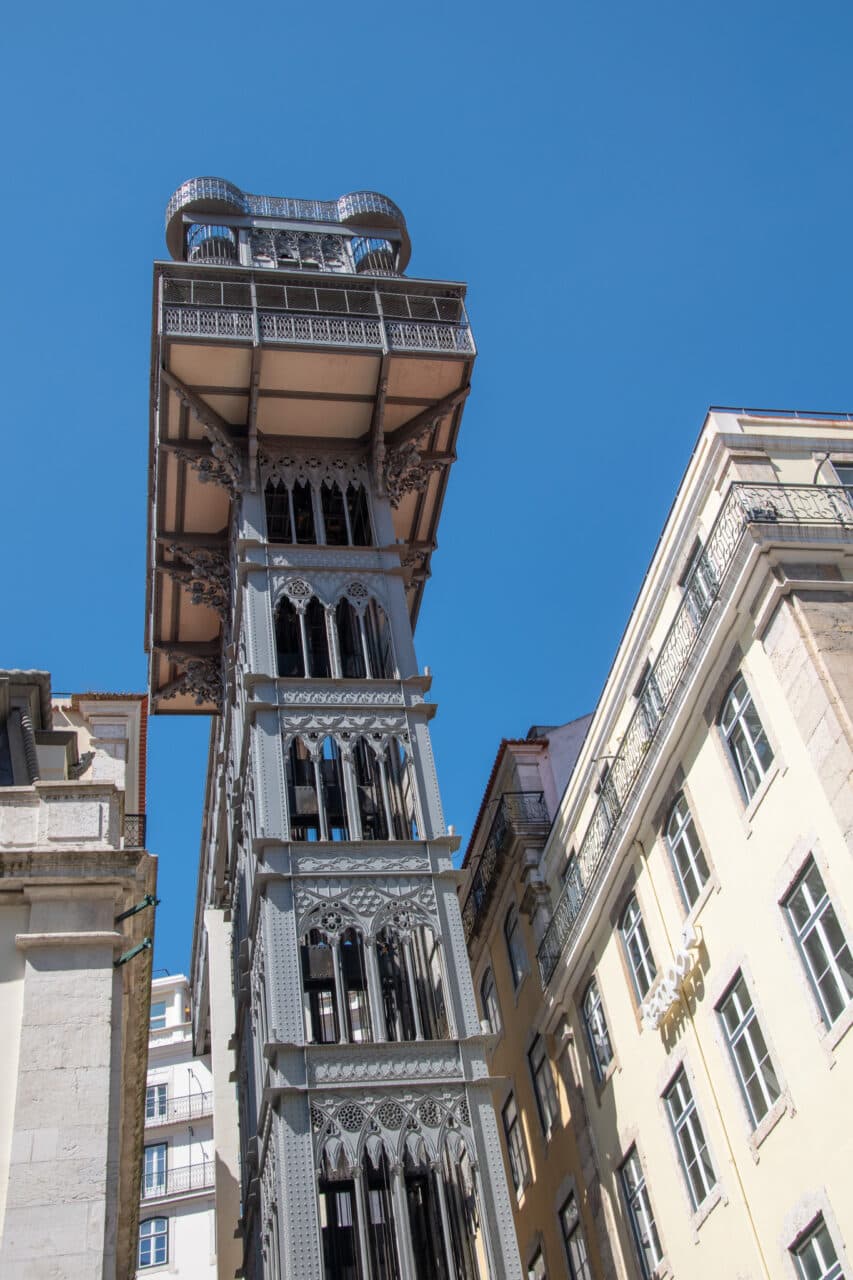
It was designed by Raoul Mesnier du Ponsard, an engineer born in Porto but of French descent. Construction was completed around 1899, and the elevator officially began operating in 1902. Initially, it was steam-powered—electricity wasn’t introduced until 1907. Today it is a national monument and the only vertical elevator in Lisbon—the others, such as Glória and Bica, are actually funicular railways.
The structure is 45 meters tall and has seven floors. The cabins are finished with wood and mirrors—there are two, each accommodating up to 29 people. At the top, an observation deck awaits with a panoramic view of St. George’s Castle, the Tagus River, and the rooftops of Baixa. A footbridge leads straight to Largo do Carmo, where you’ll find the ruins of a convent and a moment’s respite from the tourist crowds.
A word of advice: the line for the elevator can be long, especially in the summer and in the middle of the day. If you’re in good shape, you can climb the spiral staircase inside the tower—the view is the same, and the satisfaction is greater. It’s worth going up anyway, but don’t treat a ticket for the elevator alone as a must-do if you don’t like waiting.
Night life – Bairro Alto after sunset
Bairro Alto comes alive in the early evening. This is where tourists, Erasmus exchange students, and local young people all come to have fun. In the narrow streets of Bairro Alto, you’ll find small bars where you can enjoy very cheap beer and drinks on special.
If you enjoy nightlife, you should also check out Pink Street. It’s a street near the Cais do Sodré station. As the name suggests, the sidewalk here is painted pink, and colorful umbrellas hang overhead. You’ll find bars serving food and drinks here, some with truly unique decor.
Between Cais do Sodré and Bairro Alto and Chiado is the Santa Catarina viewpoint. The view used to be a bit better, but a few new buildings were recently constructed below, which slightly spoil the panorama, though you can still see a very nice sunset here. When the weather is nice, you can also listen to live music and meet young travelers who often come here for meetups.

Travel and travel medical insurance for nomdas and long-term travellers. Buy it anywhere, everywhere and enjoy a peace of mind.
Bairro Alto – What and where to eat?
Bifanas do Afonso
It’s already a Lisbon legend. Just a small window in the wall—nothing more. This place serves excellent bifanas, which are sandwiches with marinated pork. It’s a snack, but also a very Portuguese and very traditional dish. There are currently two locations in Lisbon run by the same owner. Order a small beer—a so-called “imperial”—to go with your sandwich.

Estrela da Bica
A cozy, quiet little restaurant that serves just a few dishes, mostly Portuguese cuisine, but you can also find Japanese dishes on the menu. I went there for Valentine’s Day and I highly recommend it—the food is absolutely delicious!
Manteigaria Pastel de Nata
Pastel de Nata is a Portuguese custard tart that tastes like heaven. You’ll find the traditional, authentic ones in Belém, but in my opinion, the ones at Manteigaria are the best. They don’t cost much—just a few euros—so treat yourself to a small espresso with them. Try one and you’ll want more—I guarantee it.
Magnolia Bistrot
Magnolia Bistrot is located next to a charming little park. It’s a slightly pricier spot, frequented mostly by expats from the US or the UK. I recommend it, however, because they have excellent, unique wines here, often from organic wineries. Plus, their food is delicious! I’ve eaten there a few times and can confidently recommend just about every dish. Everything is served as tapas, so you can order a few plates and try more dishes.
Pharmacia
A little bit more expensive, but it’s a great idea to come here for dinner. The restaurant is located in the museum of pharmacy and the decor reflects that. During the warmer days, you can sit in a big armchair outside and admire the panorama of the city.
Nannarela Gelato
This place was recommended to me by one of my readers, who loves this little ice cream shop. I am not such a big fan of gelato, but ice cream in Nannarela are like clouds from the sky. I really recommend it to everyone who loves sweet desserts. Portions are quite big and the prices are affordable.
Where to stay in Bairro Alto?
- Dear Lisbon Charming House: Beautiful rooms with a view over the city. The service is nice and breakfast really good. The price reflects the standard, so it’s only for those, who can spend a little bit more.
- Oasis Backpackers’ Hostel: This nice hostel is located near the Santa Catarina viewpoint, so it’s a perfect starting point for your trips to the town.
- Friendly Hills Bairro Alto: Modern, minimalist interiors, perfect location and amazing service. What not to like?
Visiting Bairro Alto and Chiado – Practical Tips
Bairro Alto and Chiado in Lisbon are worth visiting in the morning, when it’s not yet so crowded. They also have their own charm in the evening. I really enjoy walking around Chiado around 8 p.m. There aren’t as many people there then, and you have plenty of space to take photos. On the other hand, after dark, Bairro Alto comes alive with loud music as clubs and bars open up, and after midnight during the summer season, it’s hard to walk through peacefully. I once walked through there very early in the morning, and it’s a completely different side of this neighborhood. So choose the time of day based on your own travel style and preferences.
One afternoon should be enough to see the sights and get a feel for these neighborhoods. You can stop by here, for example, after visiting and exploring Alfama.
FAQ – Bairro Alto and Chiado
Are Bairro Alto and Chiado the same neighborhood? No, they are two neighboring neighborhoods that tourists often confuse. Chiado is a more elegant, literary area with cafés, bookstores, and shops—bustling all day long. Bairro Alto doesn’t come alive until the evening and is famous primarily for its nightlife, atmospheric streets, and scenic viewpoints overlooking the city.
How much time do you need to explore Bairro Alto and Chiado? Half a day is enough for a leisurely stroll with a coffee and a few stops. If you want to see the gardens, museums, and miradouros, plan a full day. It’s worth staying in Bairro Alto in the evening, as it transforms into a completely different place after dark.
When is the best time to visit Bairro Alto? It depends on what you’re looking for. Chiado is best explored in the morning—fewer crowds, cafes just opening, and you can sit peacefully with a coffee by the Pessoa monument. Bairro Alto is worth visiting twice: during the day for the miradouros and the monastery, and in the evening for the atmosphere.
Is Chiado expensive? Rua Garrett and the surrounding area are among Lisbon’s pricier shopping streets. But a coffee at A Brasileira costs the same as anywhere else—a few euros. There are plenty of expensive restaurants here, but with a little searching, you’ll also find places at affordable prices.
Is the Elevador da Bica still operating? Yes, the Elevador da Bica is operating normally (ticket price: 3.90 euros), although it closes for a few weeks every winter for a technical inspection. The Elevador da Glória, however, has been suspended since September 2025 following a tragic accident and has not yet resumed service.
How do I get to Bairro Alto and Chiado? The nearest metro stations are Baixa-Chiado (Blue and Green lines)—from there, take the elevator or stairs straight into the heart of Chiado. You can also get off at Restauradores and take the Elevador da Bica up from the Cais do Sodré side. Both neighborhoods are very close to each other—it’s best to explore them on foot.