
Travel
How to travel around Portugal? – A complete guide to the transportation system
Destinations

Joanna Horanin
Current condition

Weather in Portugal
Clear
Temperature
Feels like 16.3℃ 😞
UV index
Low
Air quality index
Good
Last updated at 10/09/2026, 20:45
Hi, I'm Joanna, the author of The Blond Travels. In the worlds of Thailand and Portugal, I feel like a fish in water - and it's no coincidence! I've been exploring Thailand for over a decade, and I've settled in Portugal for 6 years now. My mission is to support Dreamers - just like you - in discovering these fascinating countries and helping those in love with them find their own place on Earth, preferably for good! Let's uncover these unique corners of the world together.
- Transport in Lisbon
- Transport in Porto
- Practical Tips
- Between the cities – Buses and trains
- Small towns and villages – When do you need a car?
- Airports – How to get to the city centre?
- Apps, websites and cards that will make your life easier
- Summary
Portugal is small, but public transportation varies greatly depending on the location. You definitely don’t need a car in the cities, but outside of them—you do. In this article, I’ll tell you how public transportation works in Lisbon and Porto, and how to get around other parts of the country. This guide will help you plan your vacation in Portugal and make your stay and sightseeing easier.
I’ve been living in Portugal for 8 years and have explored quite a few corners of the country. I quickly learned that here, you only use public transportation to get to the most popular destinations. Getting to small towns and villages is very difficult, and you have to go to great lengths to reach less touristy destinations. I created this guide with you in mind—someone who is visiting for the first time and wondering how to use public transportation in Portugal. I hope I can help you with your preparations!
Transport in Lisbon
Metro, buses, trams and the Navagante Card
There are four metro lines in Lisbon: blue, red, green, and yellow. Each line is named after its color and is clearly marked at the stations. As a tourist, you’ll likely use the green, blue, and red lines most often, with the red line going directly to the airport.
Find more information about transportation in Lisbon here.
A single-ride ticket costs 1.90 euros. You can also buy a 24-hour pass for about 7 euros, which allows you to ride the metro, buses, trams, and elevators. You can buy the ticket at a vending machine along with a Navagante card, which costs 0.50 euros. The ticket will be loaded onto the card. To enter the metro, you must tap it on the reader. It’s worth having this card if you plan to use forms of transportation other than the metro. For the metro itself, you can use a debit or credit card. You also tap it on the reader when entering and exiting the metro.

Omio is a different kind of travel search engine. It allows you to buy cheap single tickets for trains, buses and flights as well as longer holiday passes. Find out how to make travel planning easier
Buses in Lisbon are a popular mode of transportation because they take you to places the metro doesn’t reach. A major drawback is that they aren’t punctual, are often late, and run very infrequently in some areas.
You can buy a bus ticket from the driver for 2.20 euros or in the form of, for example, a Zapping pass, which is slightly cheaper at 1.50 euros. You can also use the Navagante card and buy a day pass, as I mentioned earlier.
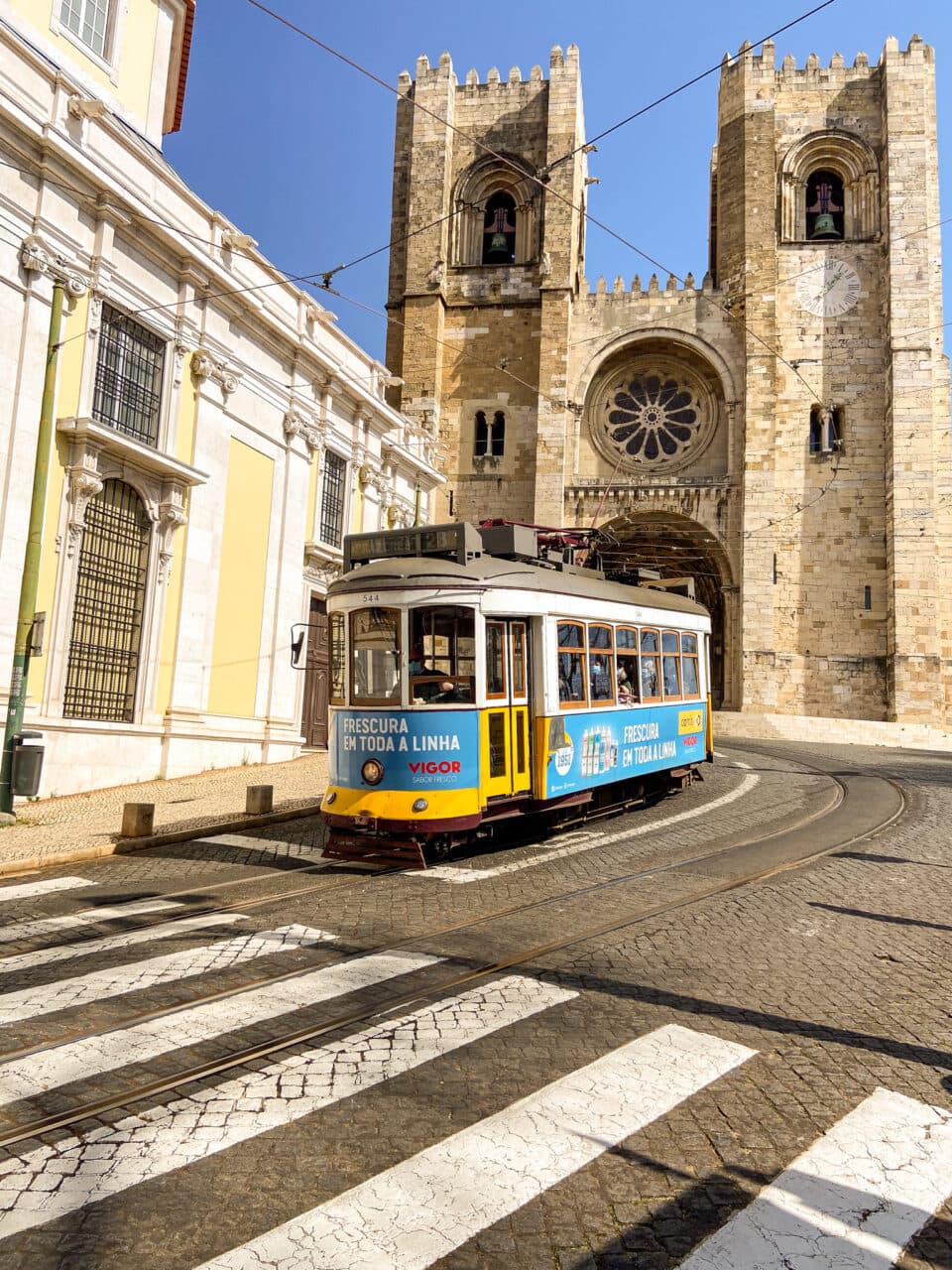
The yellow trams are a symbol of Lisbon and a very popular mode of transportation among tourists. A ticket costs about 3 euros if you buy it from the driver. So it’s worth just buying a 24-hour pass and using it on the tram.
PRO TIP: The famous 28 tram is always packed and the queues are really long. Instead, catch the tram 12E. It goes through a similar route.
Tuk-tuks

You’ll also see tuk-tuks in Lisbon. They’re available for both private and group tours. Different tour operators offer tours lasting a few hours or longer. The cost depends on the number of people, the route, and the duration of the tour. You can hail a tuk-tuk on the street, usually near major attractions like Praça do Comércio or Figueira Square. Here you can read about my experience and tuk-tuk tour of Lisbon.
My personal opinion: A tuk-tuk is a good option if you don’t have the stamina or time to explore on foot. It’s definitely a good alternative for very hot days. In other cases, I’d recommend exploring on foot.
Taxis vs Bolt vs Uber
You can also catch a private taxi in Lisbon. Taxi stands are usually located near major metro stations, sometimes near certain attractions, and at the airport. I’ve taken a taxi a few times, and I have to admit that they’re much more expensive than, say, Uber. Plus, you can’t pay by card, so you’ll need to have cash on hand.
Uber and Bolt work great in Lisbon. They’re pretty cheap and there are plenty of them, so it’s easy to get a ride. Even from the airport to the city center, Uber is much cheaper.
Lisboa Card

The Lisboa Card is a special card available to tourists. It offers free rides on public transportation in Lisbon, as well as admission to museums and attractions. I recommend purchasing it if you plan to get around the city by metro or other means of transportation and explore the attractions extensively—this card will be perfect for you. It will save you a lot of money and time.
Practical tips
Tickets and the Navagante Card
You can buy public transportation tickets at the machines in metro stations. The Navagante Card costs 0.50 euros. If you plan to use public transportation frequently, it’s worth buying a 24-hour ticket. Topping up the card using the Zapping system is a good deal if, for example, you want to travel for a few days. The Navagante Card works on the metro, buses, and trams.
Zones and Prices
Downtown Lisbon is Zone 1, and the airport is Zone 2. A single-ride ticket costs 1.90 euros, and a day pass costs over 7 euros.
Apps
Personally, I don’t use many apps to get around the city. Google Maps is more than enough for me. Apparently, the Moovit app works well, showing bus and metro arrival and departure times, but I haven’t used it myself.
🎫 The Lisboa Card — one pass, the whole city
Free transport, 50+ attractions, and the train to Sintra — all in one card
This is Lisbon’s official tourist pass, issued by Turismo de Lisboa — not a private lookalike. Buy it once, activate it on first use, and for 24, 48 or 72 hours you stop paying for the metro, trams, and entry to the city’s top sights.
✨ What’s actually included
24h — €31 · 48h — €51 · 72h — €62 (adult price, children 4–15 pay less)
Check availability →This is an affiliate link — I earn a small commission at no extra cost to you.
*The card only activates on first use, so you can buy it in advance without worrying about “losing” hours.
Tourist Pitfalls
Tram 28 has a great atmosphere, but it gets very crowded. There are also plenty of pickpockets, especially during peak season. Want to ride this tram? Head to the stop very early in the morning. You might also want to consider taking tram 12E, which follows a similar route.
Uber/Bolt in Practice
Both apps work great. You can take an Uber from the airport, but the lines for taxis are long. Bolt is often faster, though there are fewer cars available.
Transport in Porto
Metro
The metro in Porto is definitely more modern and (in my opinion) more pleasant than the one in Lisbon. There are 6 lines, designated by the letters A through F. They connect the suburbs and the airport to the city center. You can get to the airport on the purple line, and the trip from Porto takes about 30 minutes.
Porto uses the Andante system, similar to the one in Lisbon. You can buy an Andante card at a vending machine for 0.60 euros. A one-hour ride costs 1.20 euros. The ticket price depends on the zones you want to travel through. The travel time on Z2 and Z3 tickets is one hour. The price differs here: Z2 costs 1.40 euros, and Z3 costs 1.85 euros.
In Porto, there are no turnstiles like in Lisbon. You must tap your ticket on the reader located on the platforms. This validates your ticket. On the metro, tickets are checked by a conductor.
Historic buses and trams
Bus service in Porto is operated by STCP—the network covers the entire city and its surroundings, reaching areas not served by the metro. Tickets are integrated into the Andante system, meaning you use the same card to pay for the metro and some trains. The price depends on the number of zones: a single-ride ticket starts at €1.40, and a day pass at €5.35—with the Andante card. A ticket purchased from the driver costs €2.50. Cash is not accepted on board, but newer buses support contactless card payments. Some lines run 24 hours a day—night routes are marked with the letter “M.” If you plan to travel a lot, it’s worth looking into the Andante Tour card for 24 or 72 hours with unlimited rides.

Porto’s historic trams operate on two lines: numbers 1 and 18.
Line 1 is the most popular route. It runs from Infante to Passeio Alegre, along the Douro River to historic Ribeira and coastal Foz.
Line 1 is the most popular route. It runs from Infante to Passeio Alegre, along the Douro River to historic Ribeira and coastal Foz.
Line 18 connects Massarelos with Carmo and the suburbs of Porto.
Fares are 6 euros for a one-way ticket or 8 euros for a round-trip ticket. A child’s ticket costs 3.50 euros. You can purchase a ticket from the driver.
Uber, Bold and Taxis
Uber and Bolt, just like in Lisbon, run smoothly and are relatively inexpensive. They’ll take you almost anywhere. In my experience, however, rides take quite a long time because many streets in Porto are very narrow and difficult to navigate.
Private taxis are available in many places—at the airport and train stations. However, they are more expensive, and the drivers do not accept cards.
Funicular dos Guindais
Porto is a city built on hills, and you’ll feel it in your legs after just one day of sightseeing. The Funicular dos Guindais is a convenient option for those who aren’t keen on walking uphill from Ribeira to the Batalha district—the route is steep and can be quite taxing, especially in the heat. The ride takes just a few minutes, but the views of the Douro River and the Dom Luís I Bridge are truly worth the €4. A round-trip ticket costs €6, and Porto Card holders pay €3. The funicular runs daily from 8:00 a.m. to 10:00 p.m. (or midnight on weekends in the summer). The lower station is located at Rua da Ribeira Negra 314, right next to the bridge on the Porto side.
Practical Tips
Tickets and the Andante Card
You can buy tickets from vending machines at metro stations. The Andante card itself costs €0.60 and is reusable—you top it up with single-ride or day tickets. If you plan to travel for several days, it’s worth using the Zapping system, which allows you to top up a predetermined amount in advance. The card works on the metro, buses, and some commuter trains. Tourists can also purchase the Andante Tour—a 24- or 72-hour ticket with unlimited rides, available at the airport.
Zones and Prices
Porto operates on a zone-based system. The city center is usually zone Z2—a single-ride ticket costs €1.40, and a day pass costs €5.35. The airport is in zone Z4, so a metro ride from there to the center costs around €2.30. Starting in 2023, newer buses will also accept contactless card payments directly at the entrance.
Apps
Google Maps works quite well, but for public transportation in Porto, I also recommend the STCP app—it shows bus schedules and current delays. Moovit works similarly and is a good alternative if you prefer a single interface for all modes of transportation.
Tourist Traps
Trams in Porto are more of an attraction than a means of daily transportation—they run along historic routes and can get crowded. If you really want to take a ride, go early in the morning. The Funicular dos Guindais (the funicular connecting Ribeira and Batalha) is a fun experience, but the ride only takes 2 minutes—think of it as a scenic highlight, not a means of transportation.
Uber/Bolt in Practice
Both apps work flawlessly. From the airport, Uber and Bolt are generally a faster option than a taxi, though during rush hour, wait times can be similar. Traffic in downtown Porto can be heavy, so the metro is often the better choice for short distances.
Between the cities – Buses and trains
CP Trains – Lisbon – Porto, Lisbon – Faro: Prices and How to Buy Tickets
Trains run between Portugal’s major cities. You can get from Lisbon to Porto in about 3 hours. The trains are comfortable and modern. For 7 years, I regularly took the train to visit my sister in Porto, and I really had no complaints. The only thing that could be better is the price, as tickets are quite expensive.
You can take a train from Lisbon to Porto from stations like Santa Apolónia or Oriente. Trains depart several times a day. Some are slower than others, but the trip generally takes about 3 hours. You can buy tickets at the stations or online. A good option is CP, the official website of the Portuguese railways. I also often use Omio, which offers additional discounts and has a very well-designed app.
The ticket costs around 25–35 euros.
You can travel from Lisbon to Faro from the Entrecampos or Oriente stations. The trip also takes 3 hours. Trains depart 3 to 4 times a day. Tickets start at 25 euros. You can purchase them at the stations, on the CP website, or on Omio.
SafetyWing — best if you travel often
SafetyWing’s Complete plan covers outpatient care, screening, medication and maternity — plus lost luggage, cancelled flights and stolen electronics, wherever you are. Claims are processed in as little as 48 hours.
Get a SafetyWing quotePortugal also has a wide variety of bus options. There are more choices than with trains, and tickets can be really cheap. I recently traveled from Lisbon to Porto for just 5 euros!
The two largest companies—Rede Expressos and Flixbus—operate on the main routes. Both companies offer a wide range of routes and will take you all the way up north. I don’t have a favorite. I think Flixbus has very little legroom, and Rede Expressos is often more comfortable, but that’s just my preference. When I buy a bus ticket in Portugal, I go with whichever is cheaper.
You can buy bus tickets on the companies’ websites or on platforms like Omio or BusBud.
PRO TIP: When buying tickets online, you’ll be asked to provide various personal details, such as your ID number and date of birth. This is standard practice in Portugal and unfortunately you won’t be able to purchase a ticket without providing this information.
Train vs. bus vs. car on major routes
I always recommend against renting a car in cities — it’s really unnecessary there, but for travel outside of them, it can be very useful. However, if you only want to get from Lisbon to Porto or to Faro and don’t plan on exploring villages and small towns afterwards, then a car can end up being just an extra expense.
Travelling by public transport on major routes in Portugal is cheap and fast. By choosing it, you’ll save a significant amount of money.
Small towns and villages – When do you need a car?
A car will come in handy if you want to explore regions such as Alentejo, Serra da Estrela, or the interior. Without a car, you won’t get very far there. Buses do run through these regions, but not everywhere, and they’re very infrequent. In these areas, a car is definitely worth it.

The Algarve can technically be explored by bus, but I would recommend renting a car. It gives you flexibility and freedom, the ability to reach many hidden spots, discover local attractions, and eat at restaurants that are truly authentic.
Car rental in Portugal – What you need to know?
Renting a car in Portugal is straightforward and can often be very cheap, depending on the season. I recently rented a lovely Audi for €25 a day. I recommend exploring Portugal by car — it’s a really great way to see more than just the main attractions.
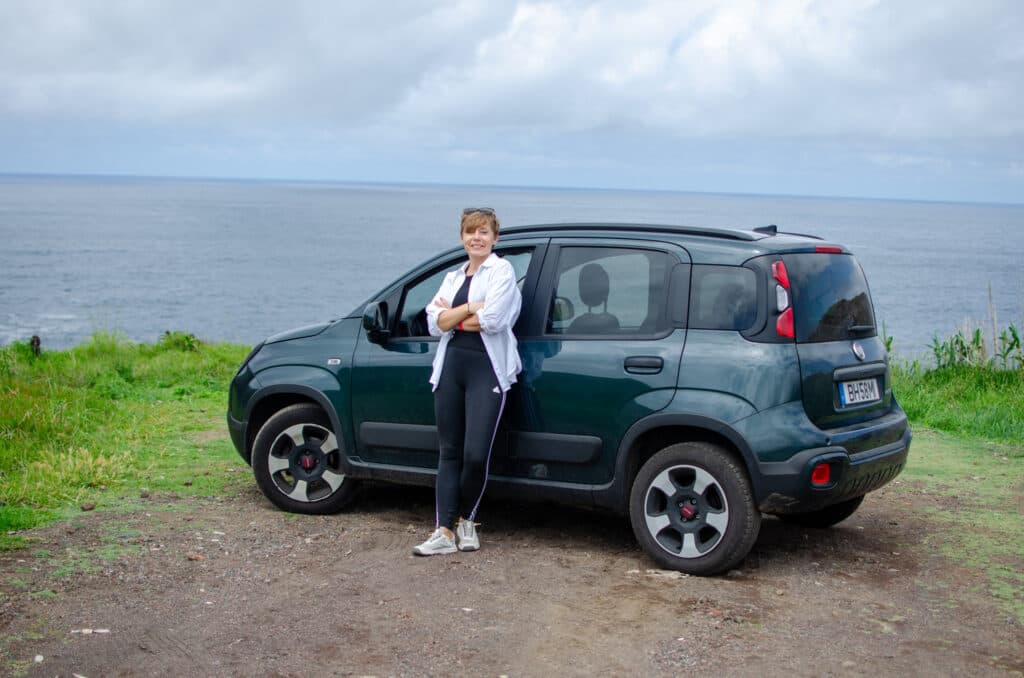
I always rent a car through Discovercars. They have great deals and competitive prices, with cars available year-round.
When renting a car, keep in mind:
- Payment by card – to rent a car, you’ll need a credit card, not a debit card. Around €2,000 will be held on your card as a deposit, which will be returned once you hand the car back.
- Insurance – this is always an additional cost. It’s optional, but worth having. A standard travel insurance policy can be sufficient.
- Additional driver – if two or more people will be driving, you’ll need to add this option separately.
- Motorway tolls – many routes have toll gates. On the Lisbon to Algarve route, special cameras record your passages and the bill is sent to the rental company, who then passes it on to you. Rental companies also offer a Via Verde option – a small device you attach to the windscreen that lets you pass through toll gates without queuing. There’s an extra charge for it, and you pay for the toll journeys after returning the car. Motorway tolls vary quite a bit, from a few euros to around €10. The most expensive are those leading to the Algarve.
PRO TIP: You can easily combine car rental with public transport. For example, take the train from Lisbon to Faro and rent a car there.
PRO TIP: You can very easily combine car rental with public transport. For example, take the train from Lisbon to Faro and rent a car there.
Airports – How to get to the city centre?
In Lisbon, getting from the airport is very straightforward. You can take the metro — the Red Line will take you to São Sebastião, where you can change lines. There are also buses, which I haven’t used myself, but lines 744 and 783 go to Avenida da Liberdade and Restauradores, right in the heart of Lisbon.
I prefer Uber. I order it as soon as I walk out of the baggage claim hall. Currently (in 2026), as you exit, you head left and walk to the car park, where there’s a designated waiting area for your driver.
In Porto, the easiest and cheapest way to get from the airport to the city centre is by metro, Line E.
In Faro, bus number 16 will take you to the city centre in 20 minutes. The stop is right outside the airport exit.
Apps, websites and cards that will make your life easier
- Comboios.pt – the Portuguese rail website, where you can buy train tickets
- Omio – buy tickets for trains, buses and flights here. A great and easy-to-use app.
- BusBud – bus tickets with an equally great app
- Uber/Bolt – handy in cities
- Navegante card in Lisbon and Andante card in Porto – public transport cards, available from machines at stations
- Lisboa Card and Porto Card – includes unlimited public transport and entry to attractions
- Google Maps – works brilliantly in Portugal
Summary
Transport in Portugal is well developed. Of course, it could be better — getting to smaller towns can often be tricky — but there’s no need to worry. I’m sure you’ll manage just fine on your travels.

If you’re only visiting cities, skip the car. You’ll save money and stress — parking alone in Porto or Lisbon is a nightmare.
If you’re combining cities with the Algarve, rent a car only for the south. Explore the city on foot and discover the Algarve by car.
If you’re visiting off-the-beaten-path places in the interior, renting a car is a must. There’s simply no other option.
What do you want to know about travelling in Portugal? Ask me a question!